Pipe loading optimization for long and cylindrical cargo


Pipes break most of the assumptions that make load planning easy. They are long enough that length becomes the binding constraint rather than volume, they are heavy enough that weight distribution turns into a legal problem, and they are round, which means that describing them as boxes discards the dimension the trade actually works in.
In this guide
Length first, volume second
For most cargo you ask how much volume fits. For pipes you usually ask a simpler question first: does the length fit at all.
For straight longitudinal loading, compare the packed length with the usable internal length and allow for supports, restraints and handling access. A nominal 12.000 m unit is 2 mm longer than an 11.998 m usable space. That is not a rounding issue. An alternative diagonal arrangement would need its own geometric and handling check.
| Packed length | Usable internal length | Difference |
|---|---|---|
| 12.000 m | 11.998 m | −0.002 m: does not fit straight longitudinally |
| 11.800 m | 11.998 m | 0.198 m before supports and restraints |
Difference = usable length − packed length. Positive clearance is not approval: supports, securing, door access and loading manoeuvres still need space.
Model the shipping unit, not just the pipe
Record the outside dimensions, gross weight and quantity of the units the yard actually lifts. If the workspace provides a dedicated tube or cylinder type, verify its input definitions and supported orientations. Otherwise, agree an appropriate representation before interpreting the result.
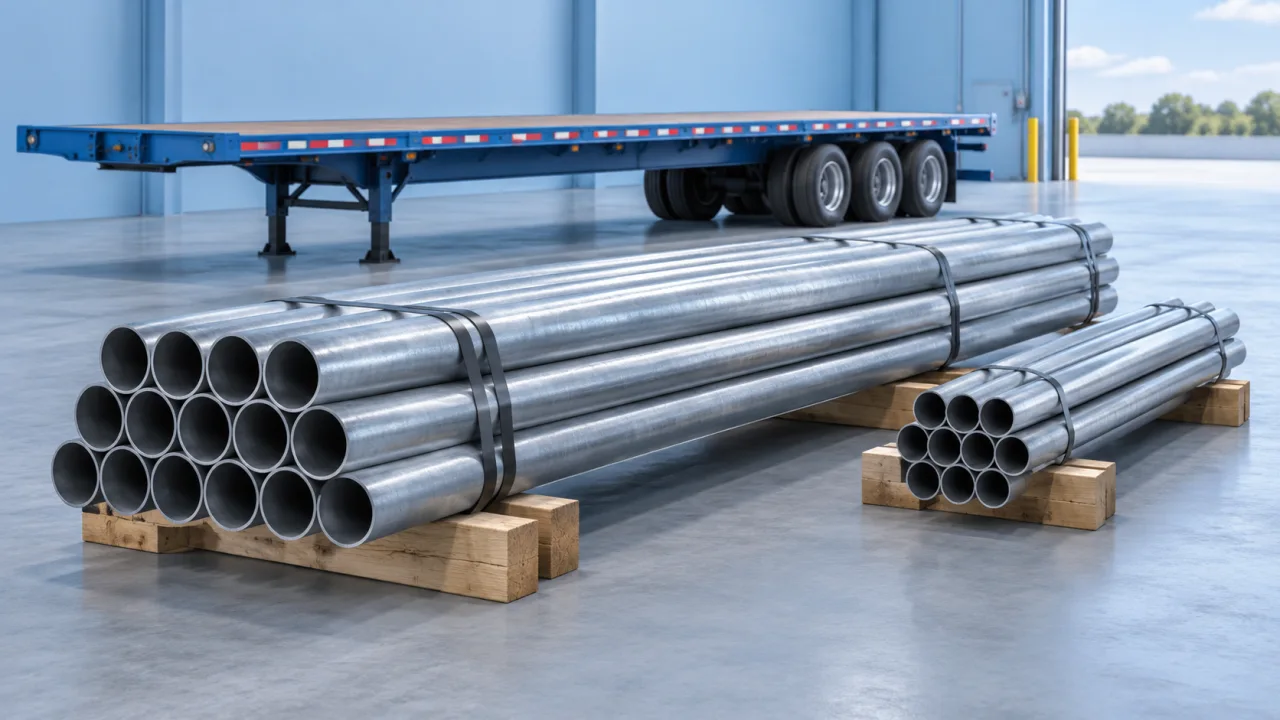
For a bundle, use its packed external envelope and combined gross weight. A strapped bundle may have a polygonal or rectangular outline; treating it as a circle without measurement can misrepresent its footprint.
Choose an approved orientation
Pipes, drums, reels and coils do not all share the same handling rules. Identify which orientations are permitted for the specific product before building the cargo list.
Long pipe is commonly carried horizontally on supports. Other cylindrical goods may have different approved positions. Check the options in the current workspace and inspect the 3D result; do not let a generic position label override the supplier's handling instructions.
If the yard bands pipe into bundles before loading, enter each bundle as a shipping unit with its measured outer dimensions and combined weight. The plan should describe what the crane actually lifts.
The rules that govern pipe loads
Record the stacking limit, the support requirements and the permitted load above each shipping unit. Use the relevant settings available in the workspace, and keep any unmodelled requirements in the loading instructions.
Two pipes with the same outside dimensions can have different permissible support and stacking loads because their wall thickness, material or packaging differs. Geometry alone cannot establish resistance to deformation. Obtain the handling limits from the product or packaging specification.
Unloading order
Long goods are difficult to reach once buried. If the shipment goes to several sites, or if some bundles are needed first, use the loading sequence option and group the cargo by destination or by priority. Items placed last come off first, which is the whole point.
Axle load with heavy long cargo
This is where pipe loads most often go wrong. A dense bundle positioned a metre too far back can put a semi-trailer axle over its limit while total weight remains comfortably legal.
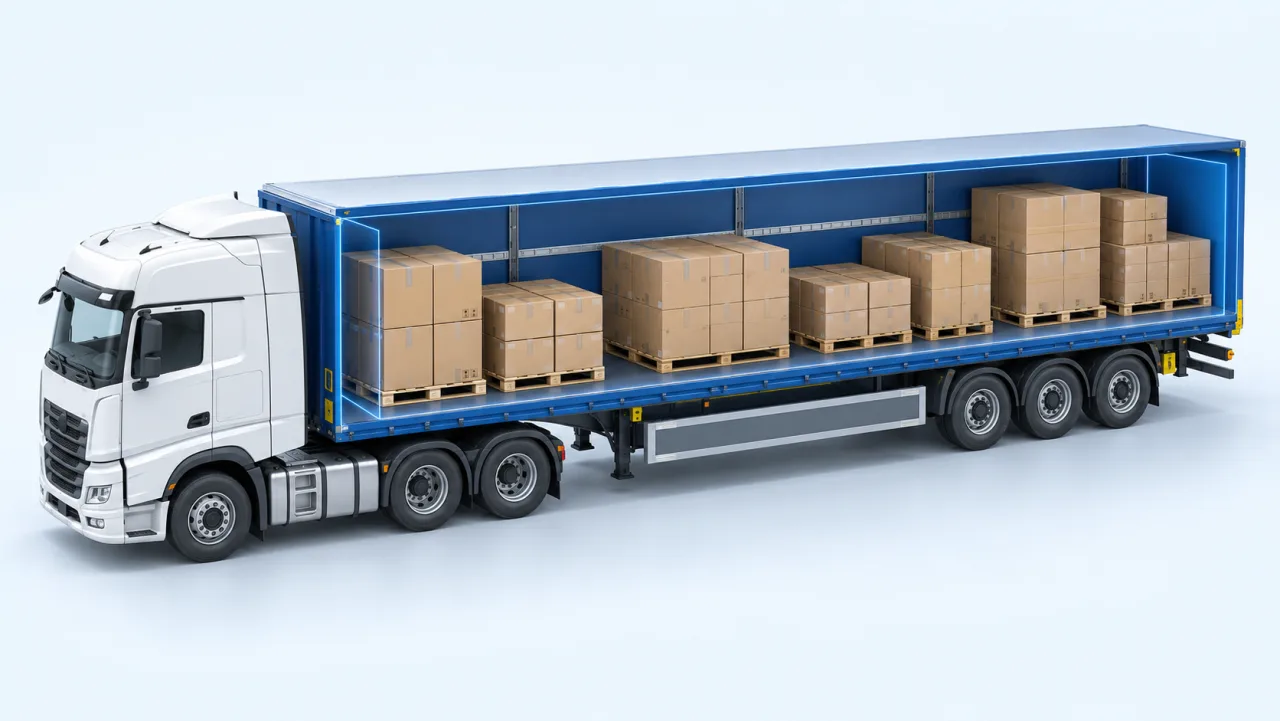
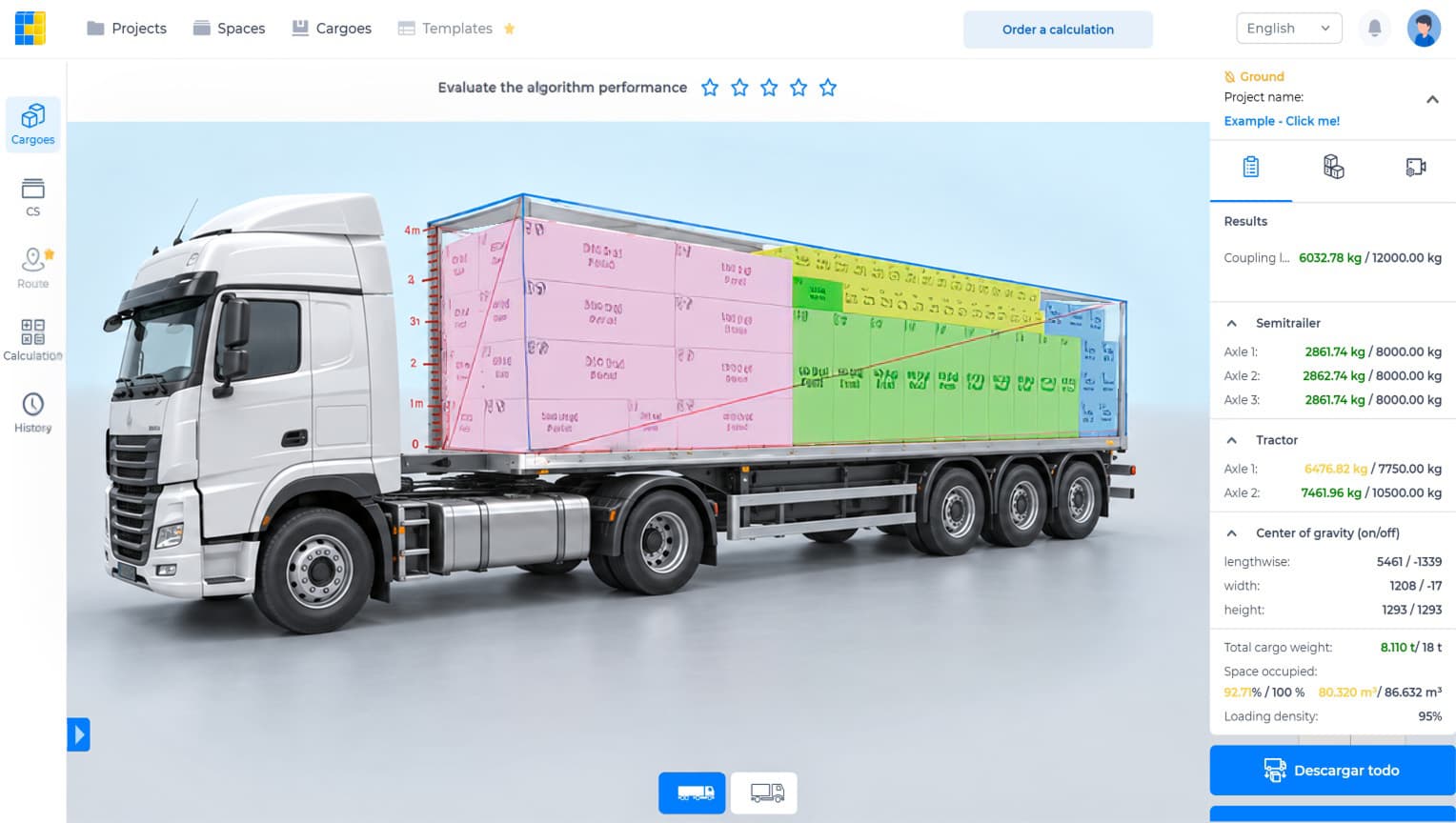
The truck demonstration in CargoTetris displays separate tractor-axle, trailer-axle and coupling readings. Its cargo total is about 45% of the configured cargo-weight limit while one tractor axle is at about 84% of its own limit. Those are demonstration values, not a pipe shipment result. Use the actual vehicle data and inspect the readings after changes to your own arrangement.
From plan to yard
Review the 3D arrangement with the yard team and share the available PDF or Excel report. Include support, restraint and handling instructions that are outside the geometric model, and check the loading sequence before lifting begins.
Watch the CargoTetris workflow
See the English product walkthrough, from cargo data to loading instructions. Duration: 7:52.

Start with your own cargo list
Create an account, enter a representative shipment and review the available planning workflow with your team.
Continue to complete registration in the app.
Lea también