How many pallets fit in a 26-foot box truck?


A 26-foot label is not a pallet count. Start with the truck’s actual usable interior and the outside dimensions of the loaded pallets.
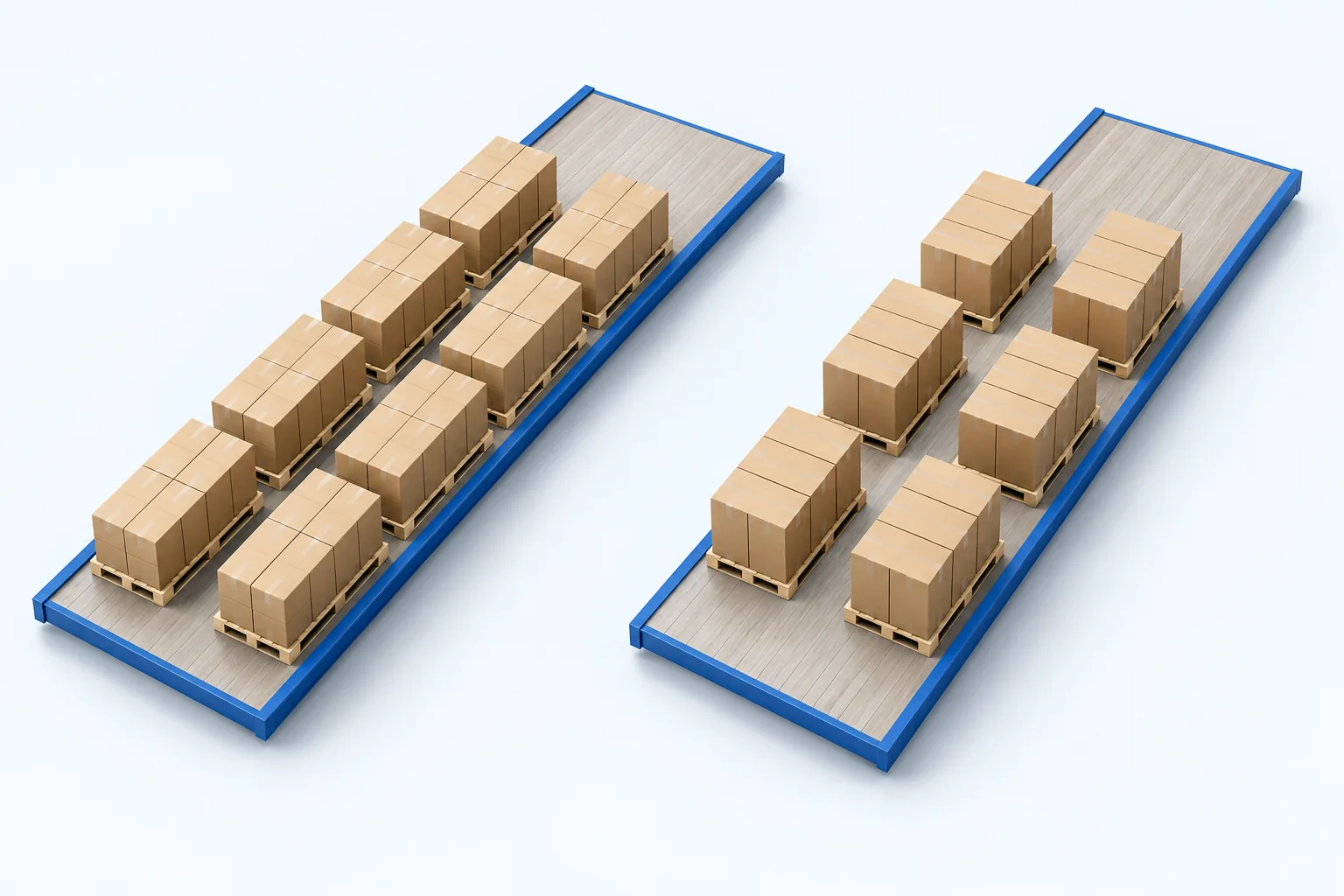
In a 311 × 97 in interior example, 48 × 40 in pallets form a 12-pallet straight layout or a 14-pallet rotated layout. The 14-pallet pattern leaves only 1 in across the full width, before any handling clearance.
In this guide
Measure the interior, not the vehicle name
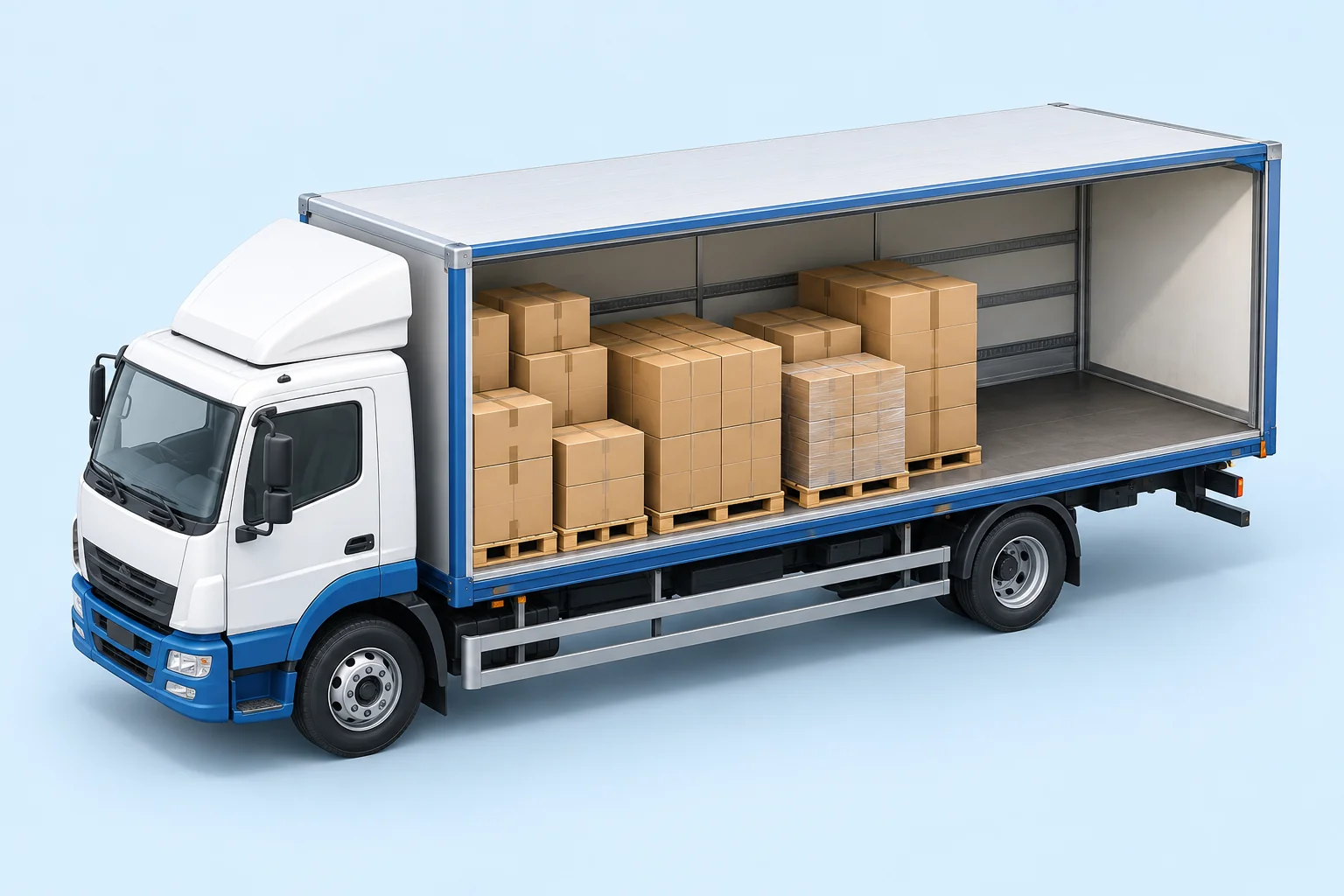
“26-foot box truck” describes a vehicle category. It does not guarantee a clear 312 in floor, a particular rear-door opening or a specific payload. The body, liftgate, wheel housings and fitted equipment can change the usable space.
For a concrete example, Penske lists a 26-foot truck interior of up to 25 ft 11 in × 8 ft 1 in × 8 ft 1 in. In inches, that is 311 × 97 × 97. Its published dimensions can vary by manufacturer. Use the allocated truck’s measured dimensions when planning a real shipment.
Measure the complete loaded pallet
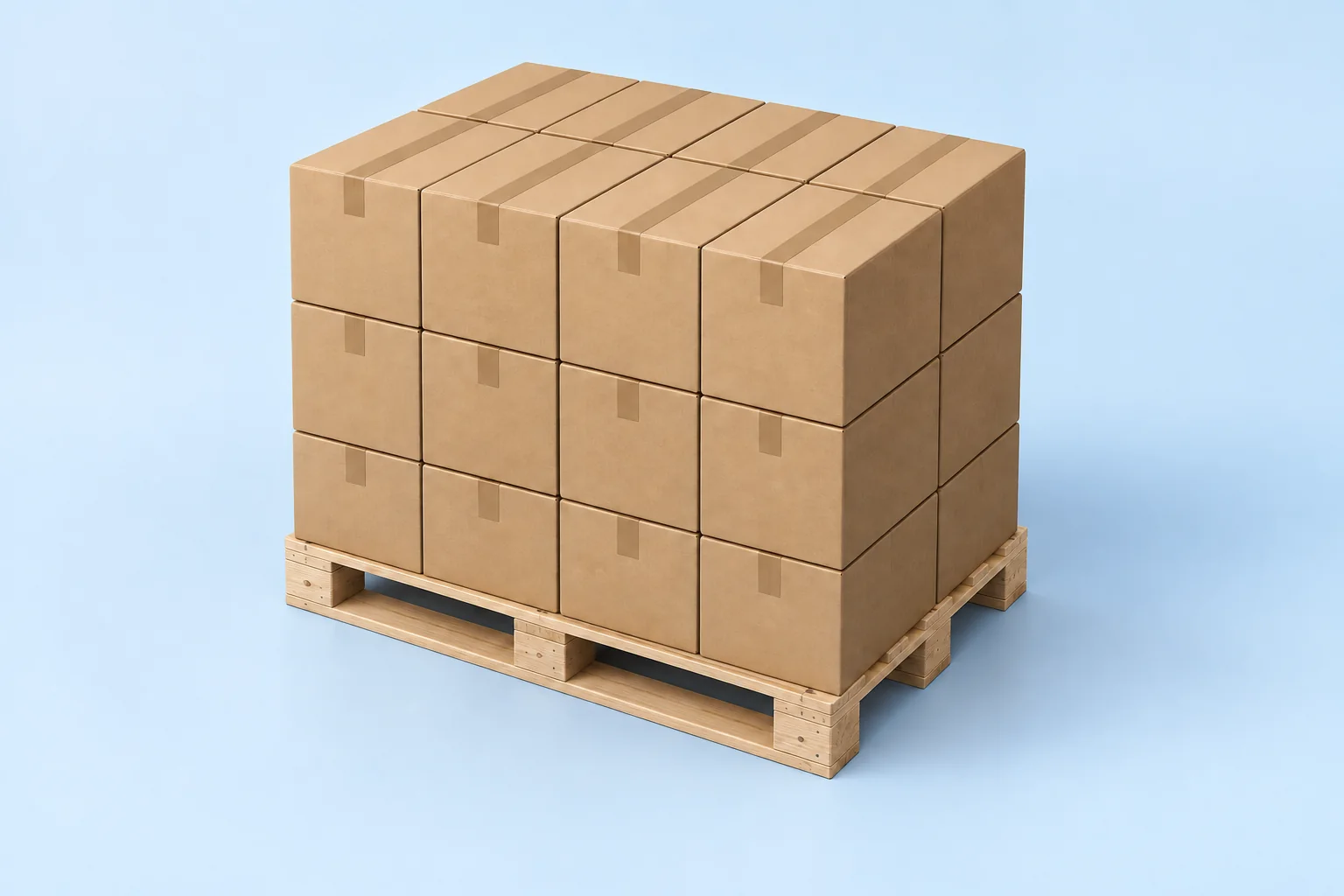
The calculation below assumes a finished footprint of 48 × 40 in, no overhang and one layer of pallets on the floor. If the wrap, cartons or protection extend beyond the base, enter that larger footprint. Record the loaded height and gross weight separately. The loaded pallet volume guide explains which dimensions include the base.
Compare two simple pallet loading patterns
For a regular rectangular pattern, calculate the number of complete rows and positions across the truck:
Pallets per floor = floor(interior length ÷ pallet length along the truck) × floor(interior width ÷ pallet width across the truck).
Round each division down before multiplying. A remaining fraction of a pallet position is not another usable position.
| Pattern | Along × across | Rows × positions | Pallets | Unused length |
|---|---|---|---|---|
| Straight | 48 × 40 in | 6 × 2 | 12 | 23 in |
| Rotated | 40 × 48 in | 7 × 2 | 14 | 31 in |
Straight loading: 12 pallets
Six rows use 6 × 48 = 288 in of length. Two pallets across use 2 × 40 = 80 in of width. This leaves 23 in lengthwise and 17 in across the full interior width.
Rotated loading: 14 pallets, with very little width to spare
Seven rows use 7 × 40 = 280 in. Two rotated pallets across use 2 × 48 = 96 in. The nominal spare width is only 97 − 96 = 1 in in total. If you need more clearance, or the actual loaded units are wider, this pattern does not fit as drawn.
These are two reproducible patterns, not proof of a universal maximum. Mixed orientations may produce other arrangements. Evaluate them using the same measured space and the same handling rules.
Check four conditions before accepting a count
- Door and equipment clearance. Check the complete loaded unit against the door opening, not just the larger interior. Verify access for the pallet jack or forklift.
- Loaded height. Include the pallet base. Allow for the actual loading operation and any obstruction above the floor.
- Payload and weight distribution. Sum the gross weights of the loaded pallets and all other items. Check the actual vehicle’s capacity and distribution requirements with the operator.
- Loading and unloading order. A pallet that fits on paper may be inaccessible at the required stop. Reserve space for approved securing and handling arrangements.
A count is not a weight allowance
If 12 loaded pallets each weigh 700 lb, their total is 8,400 lb. Fourteen such pallets weigh 9,800 lb, before other equipment or items carried with the shipment. These are illustrative totals, not an approval for any truck. Never replace an unknown pallet weight with zero.
For a longer vehicle, use the separate 53-foot trailer loading-pattern example; do not scale the 26-foot count by vehicle length alone.
Build a plan from your real pallet list
CargoTetris helps logistics teams review cargo placement in 3D. Create cargo rows for the finished pallet dimensions, gross weights and quantities. Choose or enter the loading space and set the restrictions relevant to the shipment.
- Check the truckRecord usable interior dimensions and keep door measurements in the loading checklist.
- Add the loaded palletsSeparate different footprints, heights and handling rules.
- Review the arrangementCompare the number placed with the shipment list and inspect the orientation.
- Prepare the loading teamUse the available report and confirm physical access, securing and vehicle limits.
A useful comparison holds the cargo list constant. Change one loading option, inspect the result and record why a pallet was left out or repositioned. That makes the plan easier to check before the vehicle arrives.
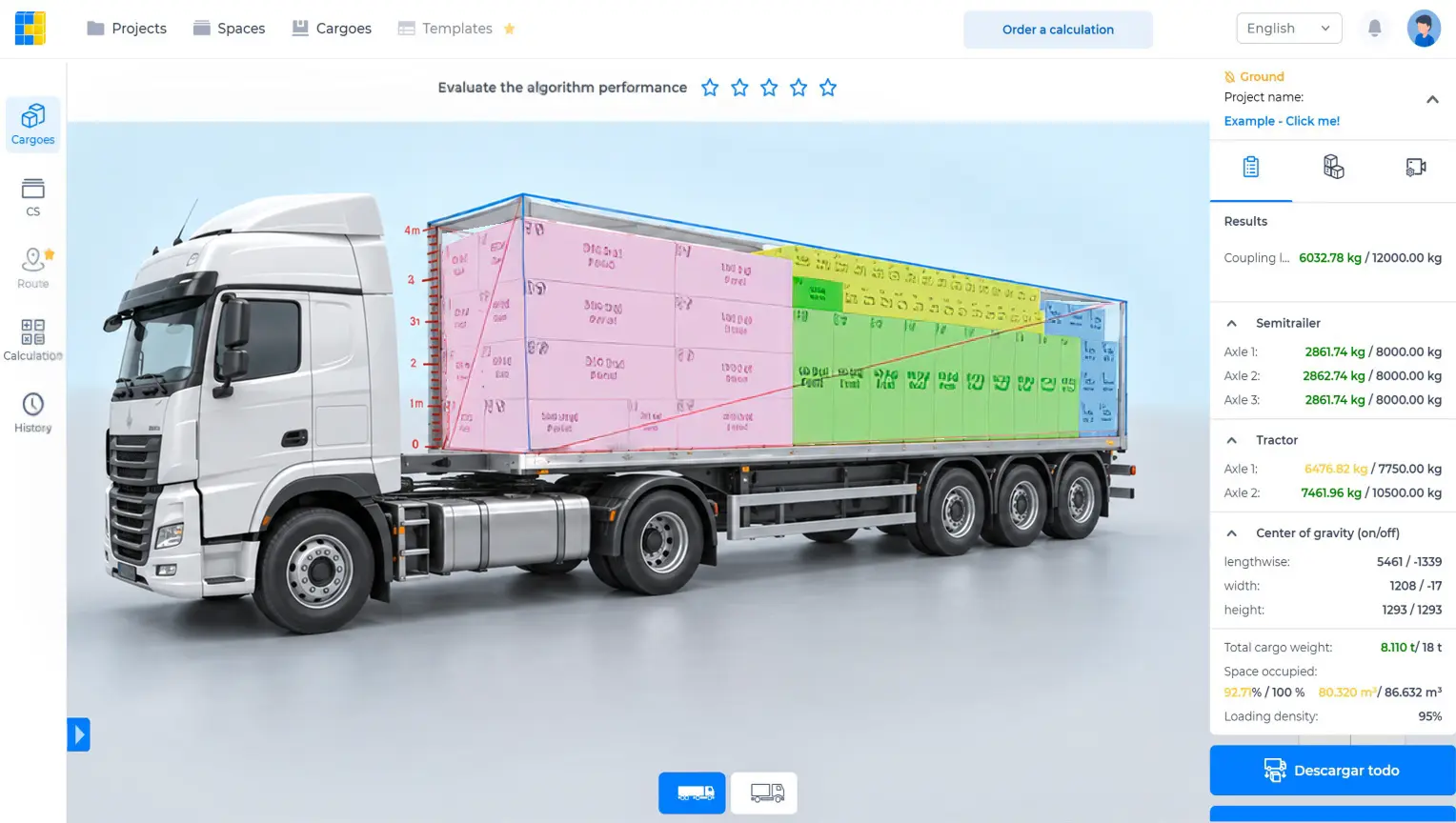
Watch the CargoTetris workflow
See the English product walkthrough, from cargo data to loading instructions. Duration: 7:52.

Box-truck pallet questions
Can every 26-foot truck carry 14 pallets?
No. Fourteen is a geometric result for this particular interior, pallet footprint and orientation. The very small width allowance, door access, payload or loaded dimensions may prevent that layout.
Can I calculate the count from CBM?
Not reliably for single-floor pallets. Cubic volume does not describe whether the pallet footprints form a usable arrangement or whether another pallet can be stacked above them.
What if my pallets are different sizes?
Keep each finished size as a separate cargo type. Review the mixed arrangement rather than dividing the floor area by an average pallet area.
Plan your next box-truck shipment
Create your CargoTetris account and build a loading plan from your actual pallet list.
Continue to complete registration in the app.
Read also