How to calculate loaded pallet volume


Measure the complete shipping unit, including the base and packaging. Calculate its CBM, then check the floor space and loading arrangement.
A loaded pallet measuring 120 × 80 × 150 cm occupies 1.44 m³. The 150 cm height must include the pallet base. Ten identical units total 14.40 m³.
In this guide
Measure the complete loaded pallet
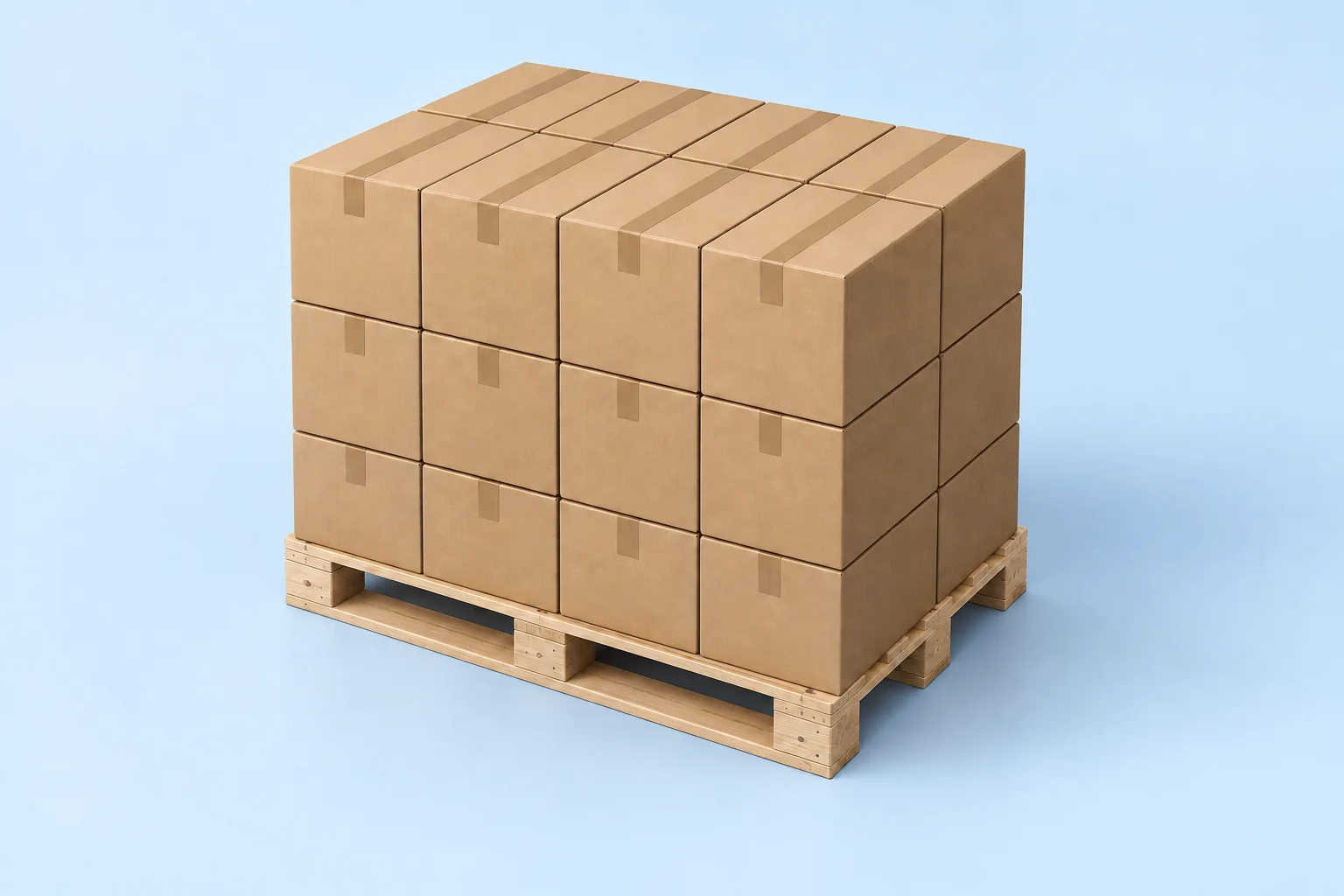
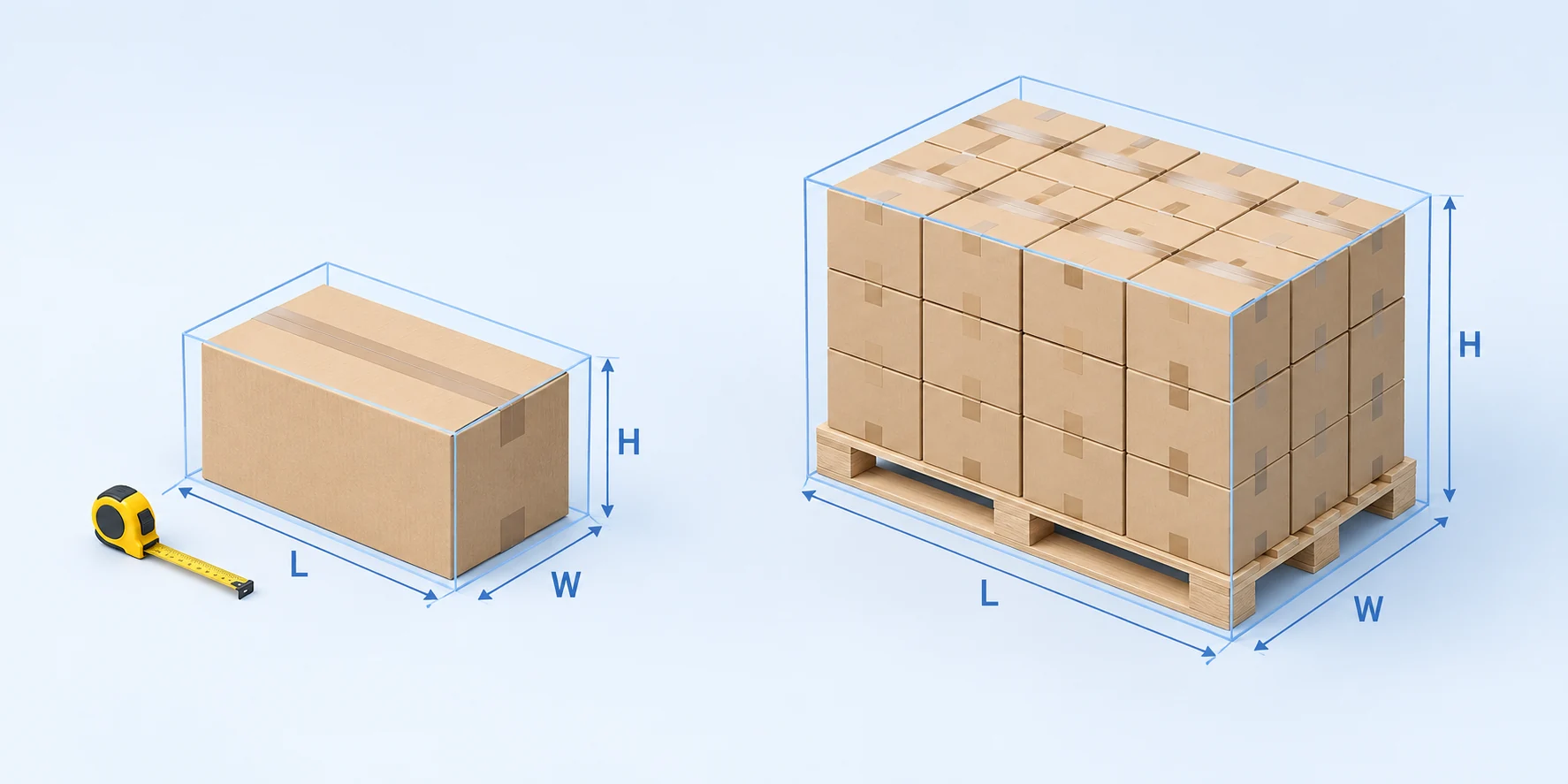
Loaded pallet volume = outside length × outside width × total loaded height. Use metres to get cubic metres, or CBM. Measure the unit after it has been packed, including the pallet base, wrapping and any overhang.
A footprint alone does not tell you the volume. Two pallets with the same base can need very different amounts of space when their heights differ. For load planning, record dimensions, gross weight and stacking restrictions separately.
Take three outside measurements
Measure the greatest length and width of the finished unit. If the cartons extend beyond the base, use the cartons’ outside dimensions. Measure height from the bottom of the pallet to the highest point of the load, including a top cap or protection that adds height.
Keep the empty pallet dimensions in a separate field if they are needed for packaging work. The vehicle planner needs the complete shipping unit. Calling both values “pallet size” without specifying which one you mean creates avoidable ambiguity.
Use the actual pallet specification
A 120 × 80 cm footprint and a 48 × 40 in footprint are useful examples, but neither describes every pallet in a country. Confirm the pallet you use, the packed load and any customer requirements. Height limits and allowable loads depend on the pallet, packaging, equipment and shipment; they are not universal constants.
Calculate a metric example
Suppose a finished loaded pallet measures 120 × 80 × 150 cm, with the base already included in the 150 cm height. Convert to metres and multiply:
1.20 × 0.80 × 1.50 = 1.44 m³ per loaded pallet.
Ten identical loaded pallets therefore occupy 14.40 m³ as the sum of their outside rectangular volumes. This is an illustrative calculation. It does not confirm that ten pallets fit a particular truck or container.
See how height changes the result
The following examples all use a 120 × 80 cm outside footprint. Every height includes the pallet base.
| Total loaded height | CBM per pallet | CBM for 10 identical pallets |
|---|---|---|
| 120 cm | 1.152 m³ | 11.520 m³ |
| 150 cm | 1.440 m³ | 14.400 m³ |
| 180 cm | 1.728 m³ | 17.280 m³ |
Adding 30 cm to that footprint adds 0.288 m³ per pallet, because 1.20 × 0.80 × 0.30 = 0.288. The 180 cm row is a calculation example, not a recommendation or a permitted height for your shipment.
Account for overhang
If the finished load measures 124 × 84 × 150 cm, its outside volume becomes 1.5624 m³. Compared with the 120 × 80 × 150 cm example, that is an additional 0.1224 m³ per pallet.
Overhang also changes the floor layout. A planner using only the smaller base may show a fit that the finished load cannot achieve. Measuring overhang is not the same as approving it: confirm whether it is allowed for your pallet, packaging and transport arrangement.
Calculate an example in inches
For a loaded unit measuring 48 × 40 × 60 in, multiply all three dimensions and divide by 1,728:
48 × 40 × 60 ÷ 1,728 = 66.67 ft³, rounded to two decimal places.
The same volume is approximately 1.888 m³. Here, too, the 60 in height includes the pallet. For more unit conversions and mixed-carton examples, see how to calculate cargo volume.
Do not convert only two dimensions
All three dimensions must use the same unit before multiplication. If your supplier gives length and width in inches but height in centimetres, convert one set first. Keep the original figures in the packing record so another person can reproduce the result.
Keep volume, floor space and weight separate
A non-stackable pallet still needs floor space
The 120 × 80 cm example occupies 0.96 m² of floor area, regardless of whether it is 120 cm or 150 cm high. If nothing may be placed on top, the empty space above it is not automatically available for another pallet.
This is why dividing a container’s cubic capacity by pallet CBM can produce a misleading pallet count. Check the container loading example to see how floor arrangement and volume differ.
Include the pallet in gross weight once
For a finished unit, gross weight includes the goods, packaging and pallet. If the recorded weight already includes the base, do not add it again. Do not use a zero weight to stand for an unknown weight: mark the value as missing and obtain it before completing a weight-dependent plan.
Avoid four recurring measurement mistakes
- Using carton height as loaded height. If a 15 cm base was omitted, a 120 × 80 cm footprint would be understated by 0.144 m³. That is an example base height, not a pallet standard.
- Measuring the base instead of the outside load. Wrapping, corner protection and overhang may increase the footprint.
- Adding carton volumes to loaded pallet volume. That counts the same goods twice when the pallet is represented as one unit.
- Treating a volume total as a confirmed fit. Doors, orientations, handling clearances and stacking permissions still need to be checked.
Check pallet placement in CargoTetris
Use the measured loaded dimensions to move from a CBM total to a visible arrangement. CargoTetris supports geometric planning for pallets and cargo spaces, with 3D visualisation to review where the load is placed.
Prepare one row for each distinct loaded pallet size and handling rule. Choose the relevant loading space, review the cargo count and inspect the arrangement. The useful result is a plan based on your finished shipping units, not a calculation based on an empty pallet’s nominal dimensions.
- Record the finished unitsUse the outside length, width, total height and gross weight of each loaded pallet.
- Add distinct pallet typesKeep different sizes and stacking rules in separate cargo rows.
- Choose the loading spaceUse the truck or container interior for the shipment you are planning.
- Review the 3D arrangementReconcile the count with your cargo list and prepare a report for the loading team.
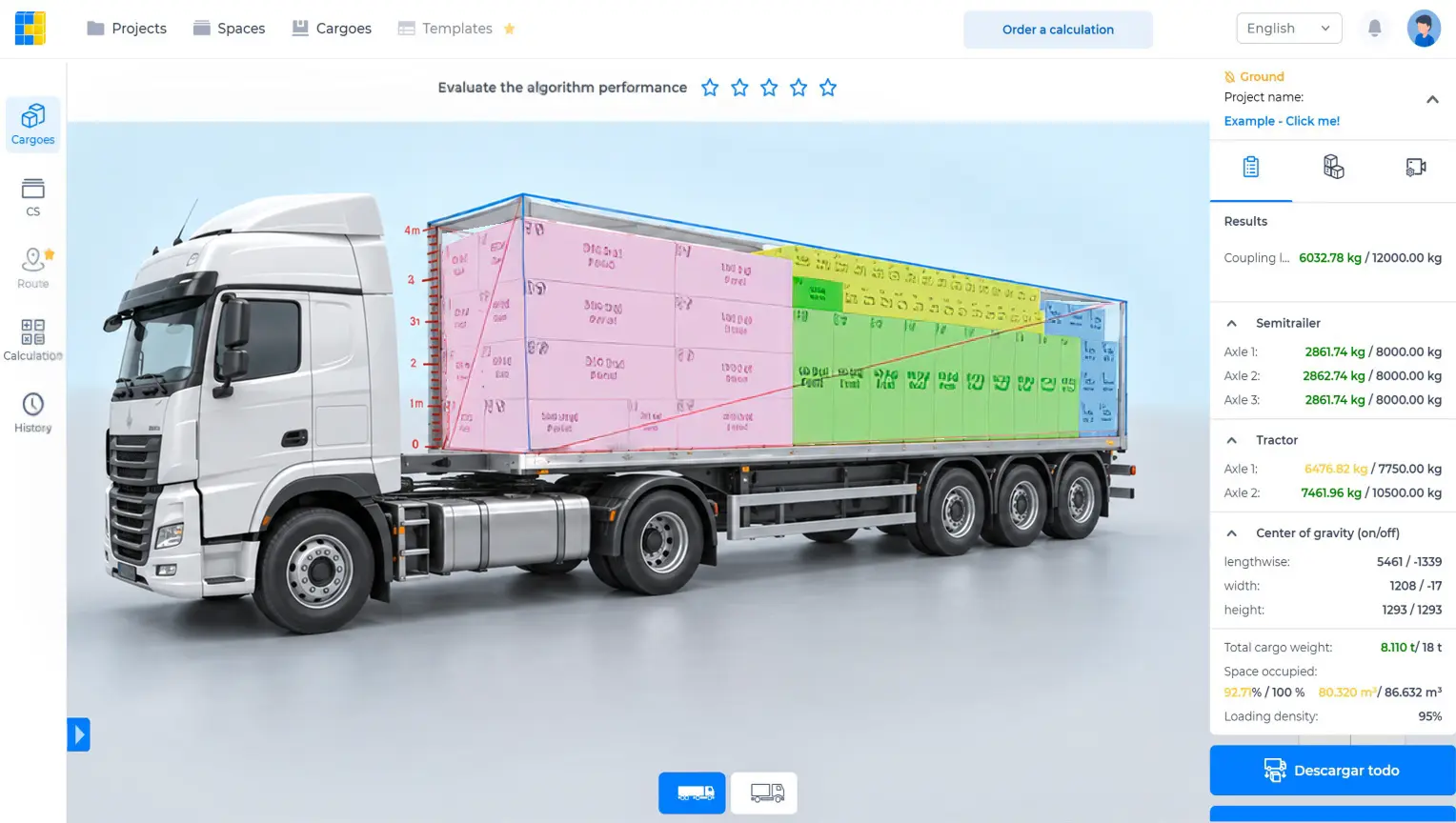
Watch the CargoTetris workflow
See the English product walkthrough, from cargo data to loading instructions. Duration: 7:52.

Loaded pallet volume questions
Is pallet volume the same as the sum of carton volumes?
Usually they describe different things. The outside loaded-pallet volume includes the base and spaces within its rectangular envelope. The sum of carton volumes counts the cartons only.
Can I use the same height for every pallet?
Only if the finished units really have that height. For mixed loads, measure or verify each distinct configuration and group identical units together.
Does a smaller CBM mean a lower freight price?
Not automatically. The quote can depend on weight, occupied floor space, stackability, route and the carrier’s terms. Use accurate dimensions to support the quote, then confirm the actual charge.
Check where your loaded pallets fit
Create your CargoTetris account and use the finished pallet dimensions to review a 3D arrangement in a truck or container.
Continue to complete registration in the app.
Leia também