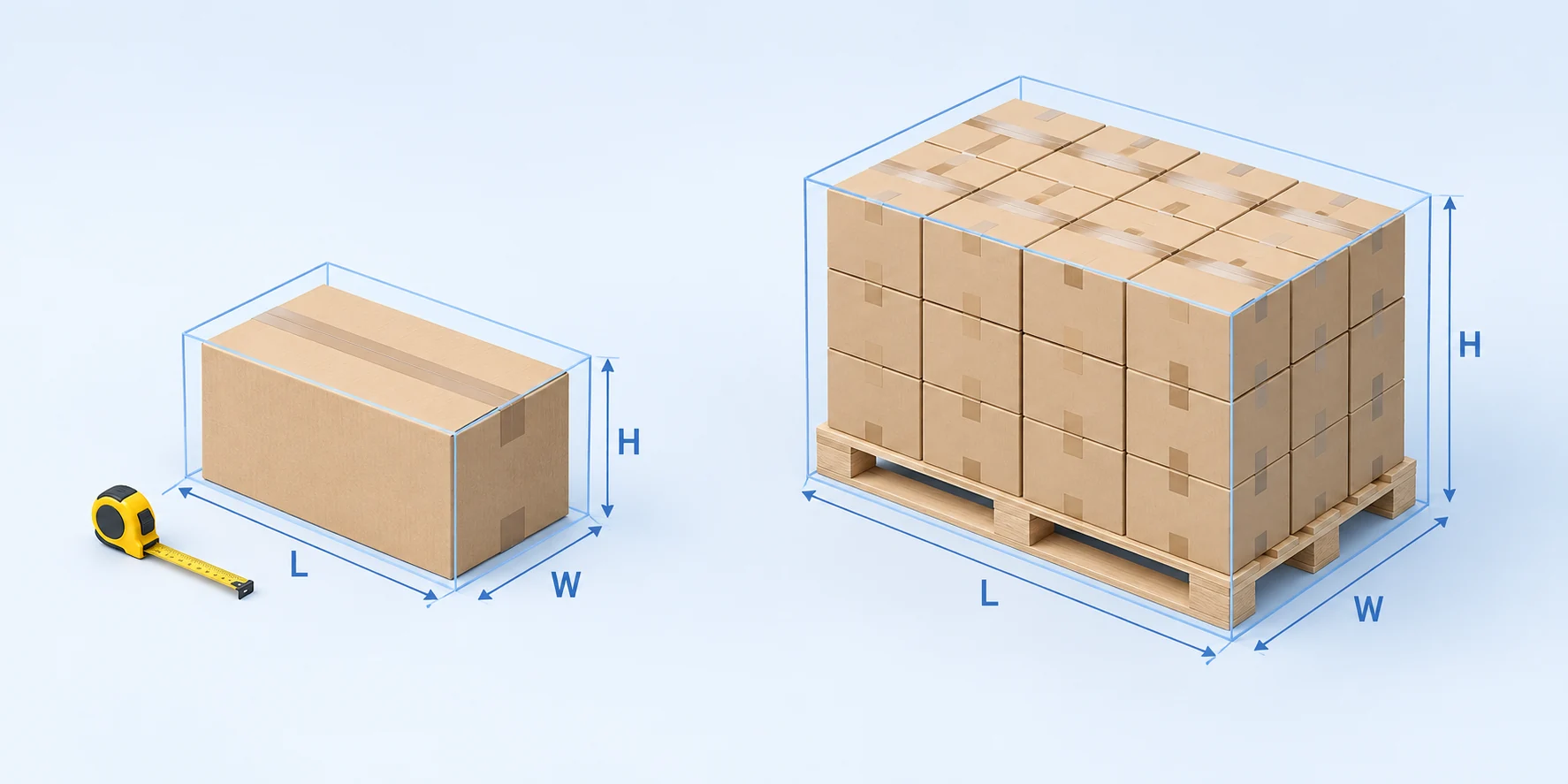
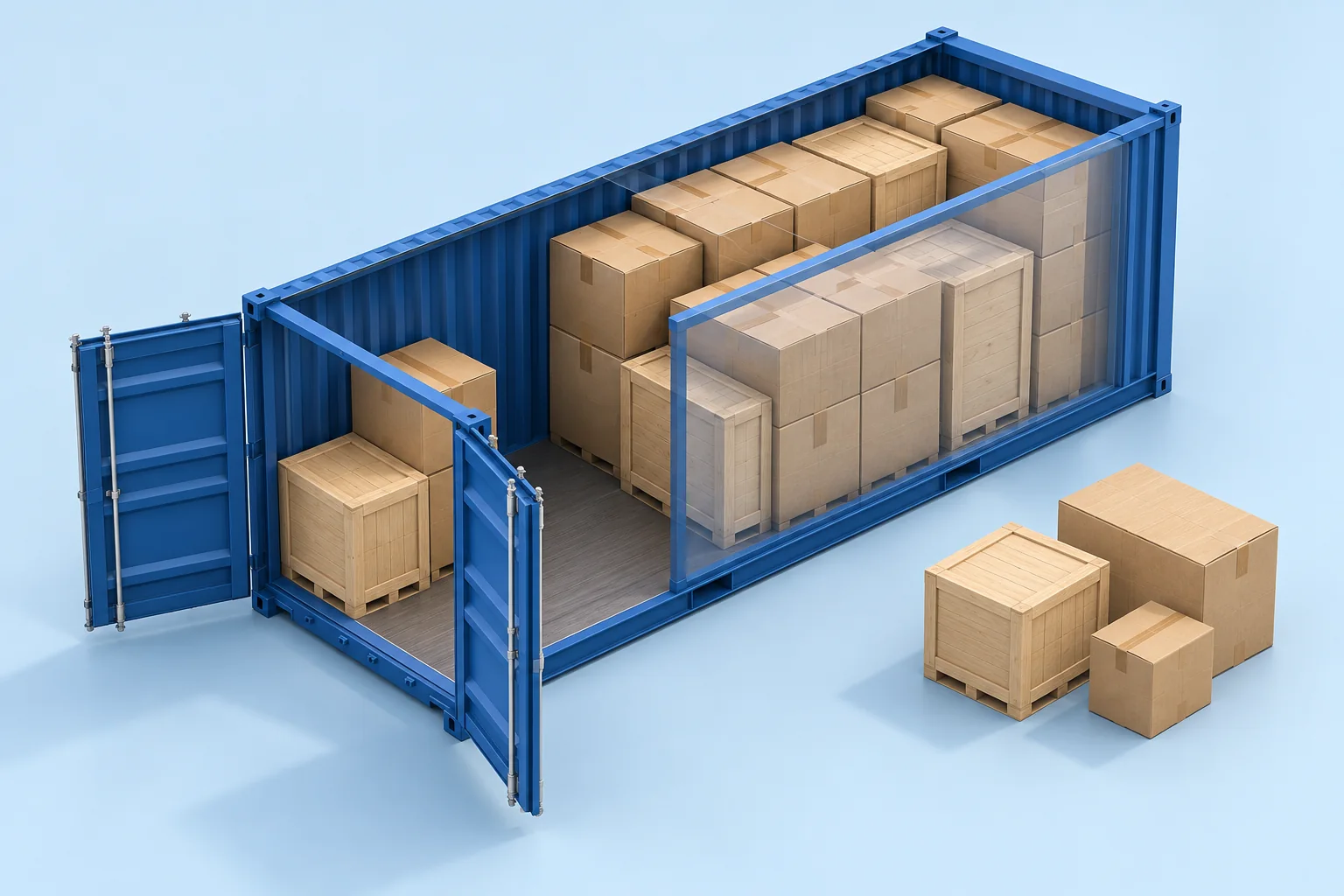
CBM means cubic metres. For a rectangular shipping unit, multiply its outside length, width and height in metres. Multiply that result by the number of identical units. For mixed cargo, calculate each size separately and add the totals.
The basic calculation is volume = length × width × height × quantity. It gives you a starting point for a freight enquiry or load plan. It does not show whether the units will fit through a door, stack on each other or form a workable arrangement inside a vehicle.
Choose one unit before you calculate
Convert all three dimensions to the same unit. If your measurements are in centimetres, divide their product by 1,000,000 to obtain cubic metres. For millimetres, divide by 1,000,000,000. Do not mix a length in metres with a width in centimetres.
For example, a packed carton measuring 60 × 40 × 40 cm occupies 0.096 m³: 60 × 40 × 40 ÷ 1,000,000. Twenty identical cartons occupy 1.92 m³. Keep the unrounded values in your working sheet and round the final display, so small differences do not accumulate across many lines.
Measure the unit that will actually be shipped
Use the outside of the finished package, including protective packaging, protrusions and any packaging that changes its dimensions. A product drawing can be useful for identification, but it is not a substitute for the packed dimensions. Record weight separately: volume alone cannot tell you how heavy the shipment is.
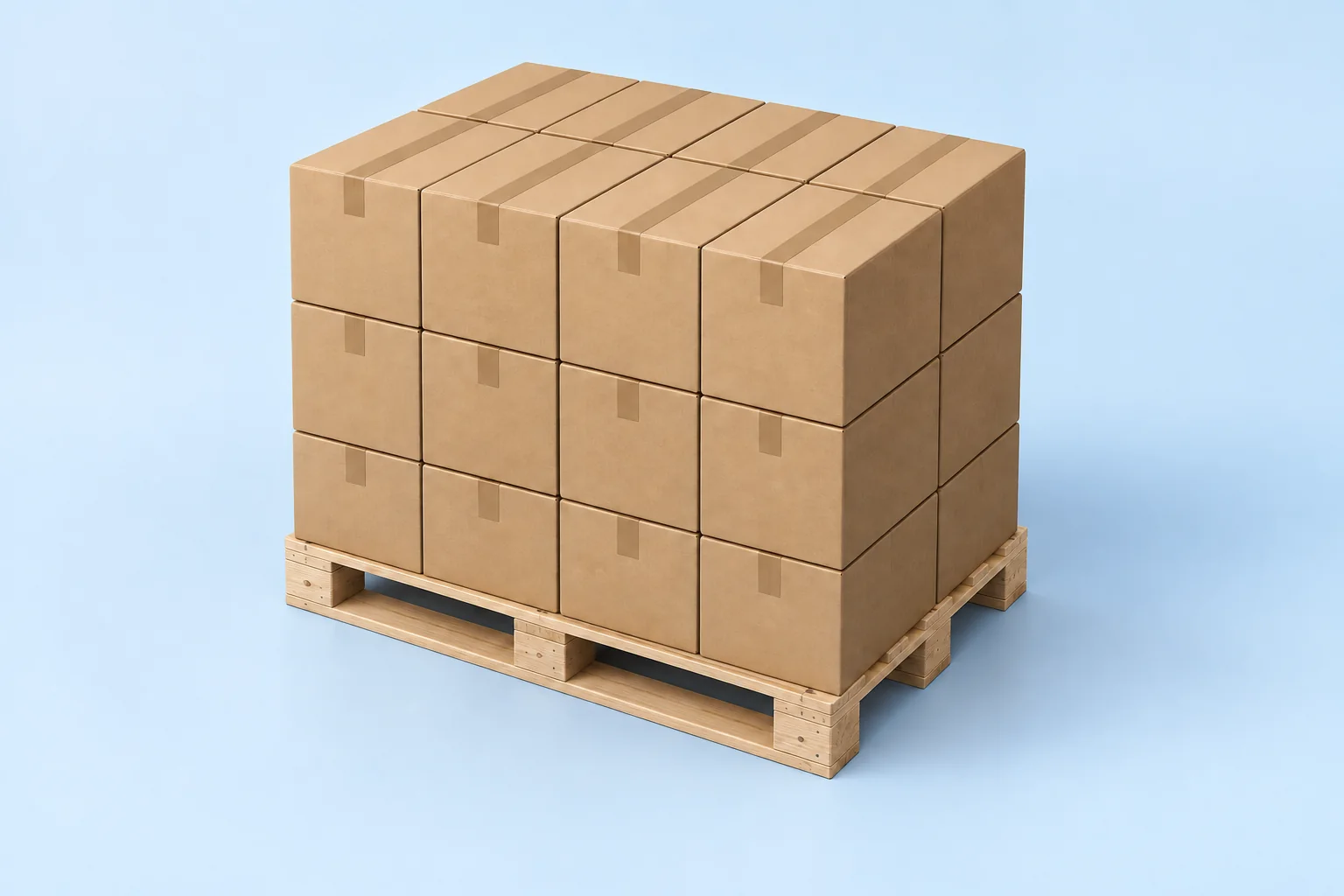
If you will ship cartons on pallets, decide whether the plan represents individual cartons or complete loaded pallets. Entering both as separate cargo would count the same goods twice. The loaded pallet volume guide explains the difference.
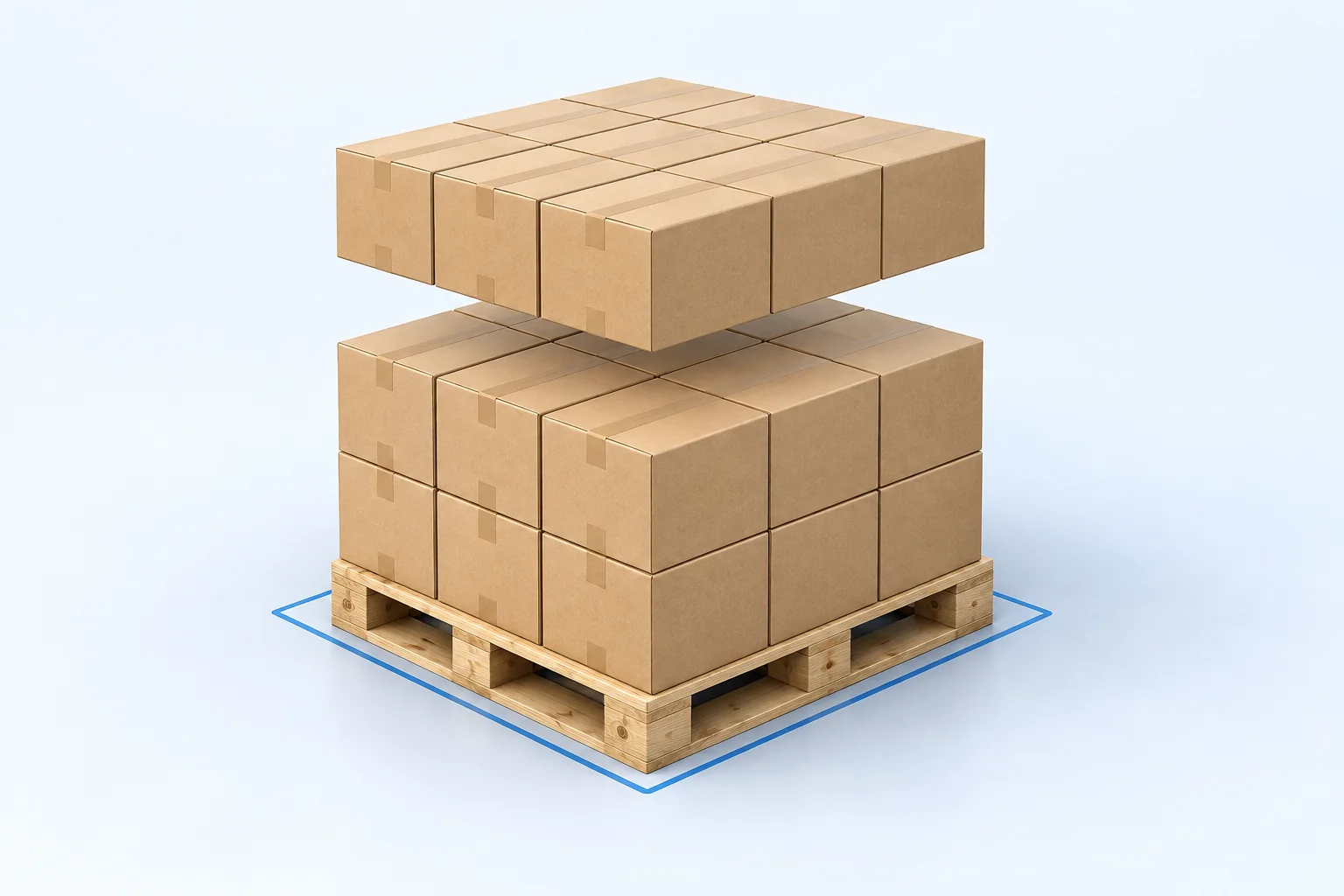
Measure the complete shipping unit. For a loaded pallet, include the base and any overhang. Count either the complete pallet or its individual cartons, according to your plan.
Work through a mixed shipment
This illustrative shipment contains three carton sizes. The inputs are examples, not customer results. Each line contains identical, rectangular packed cartons.
Worked example: 30 cartons, three sizes
Cargo line
Outside size, cm
Quantity
CBM per carton
Line total, m³
A
60 × 40 × 40
20
0.096
1.920
B
80 × 50 × 50
8
0.200
1.600
C
120 × 60 × 50
2
0.360
0.720
Total
Three sizes
30
Not applicable
4.240
The total is 4.24 m³, calculated as 1.92 + 1.60 + 0.72. That is the sum of the boxes’ outside volumes. It excludes spaces between them and any additional pallet, wrapping or blocking that has not yet been included in the measurements.
Make the data easy to check
Give every line a recognisable cargo ID. Keep dimensions, units and quantity in separate columns. Use one row per size and handling rule: two boxes with the same dimensions may need different rows if one must remain upright and the other may be rotated.
Before sending the sheet to a colleague, compare the total quantity with the packing list. In this example the check is 20 + 8 + 2 = 30 cartons. Then check one line by hand. These two small checks catch a missing quantity and a misplaced decimal before either reaches a load plan.
Convert cubic feet and inches correctly
One foot is exactly 0.3048 m, so 1 ft³ = 0.028316846592 m³. When measurements are in inches, divide the product of length, width and height by 1,728 to obtain cubic feet.
For a rectangular unit measuring 48 × 40 × 60 in, the volume is 115,200 cubic inches, or approximately 66.67 ft³ / 1.888 m³. This is a calculation for those inputs, not a standard volume assigned to every pallet of that footprint. Changing the loaded height changes the result.
Keep the original measurements
Avoid repeatedly converting and rounding between inches and centimetres. Keep the original measurement and its unit in the source sheet, then calculate the converted value in a separate column. If two teams use different systems, agree which values are authoritative before planning the load.
Understand what CBM cannot answer
Volume is different from a loading arrangement
Two loads with the same CBM can need different floor space. Long items, non-stackable pallets and packages that must stay upright all affect placement. A small amount of unused volume spread between boxes may be impossible to fill with another complete item.
For irregular cargo, distinguish the material’s geometric volume from the rectangular space reserved for handling it. A cylinder’s mathematical volume does not describe the empty corners around it when it is planned as a rectangular unit. Use the model appropriate to your loading method and record the assumption.
CBM is different from a freight price
CBM by itself is not a shipping quote. Actual weight, chargeable-weight rules, service, route and other commercial terms may affect the price. Do not apply a universal volumetric-weight divisor to every carrier or transport mode. Confirm the rule for the shipment you are quoting.
Turn the measurements into a 3D load plan
CargoTetris is a B2B load-planning service for logistics and warehouse teams. Use the dimensions, quantities and weights from your cargo list to see an arrangement in a selected loading space. Review the plan before the physical loading starts.
Create a projectStart with the shipment you want to plan.
Add your cargoEnter the packed dimensions, weight and quantity, or import an Excel cargo list.
Choose a loading spaceSelect a truck, container or pallet, or enter your own cargo-space dimensions.
Set the cargo rulesSpecify the relevant orientation, stacking and loading-sequence restrictions.
Review the 3D resultInspect how the units are arranged in the selected space.
Prepare the loading teamSave the available PDF or Excel report to use when discussing the plan.
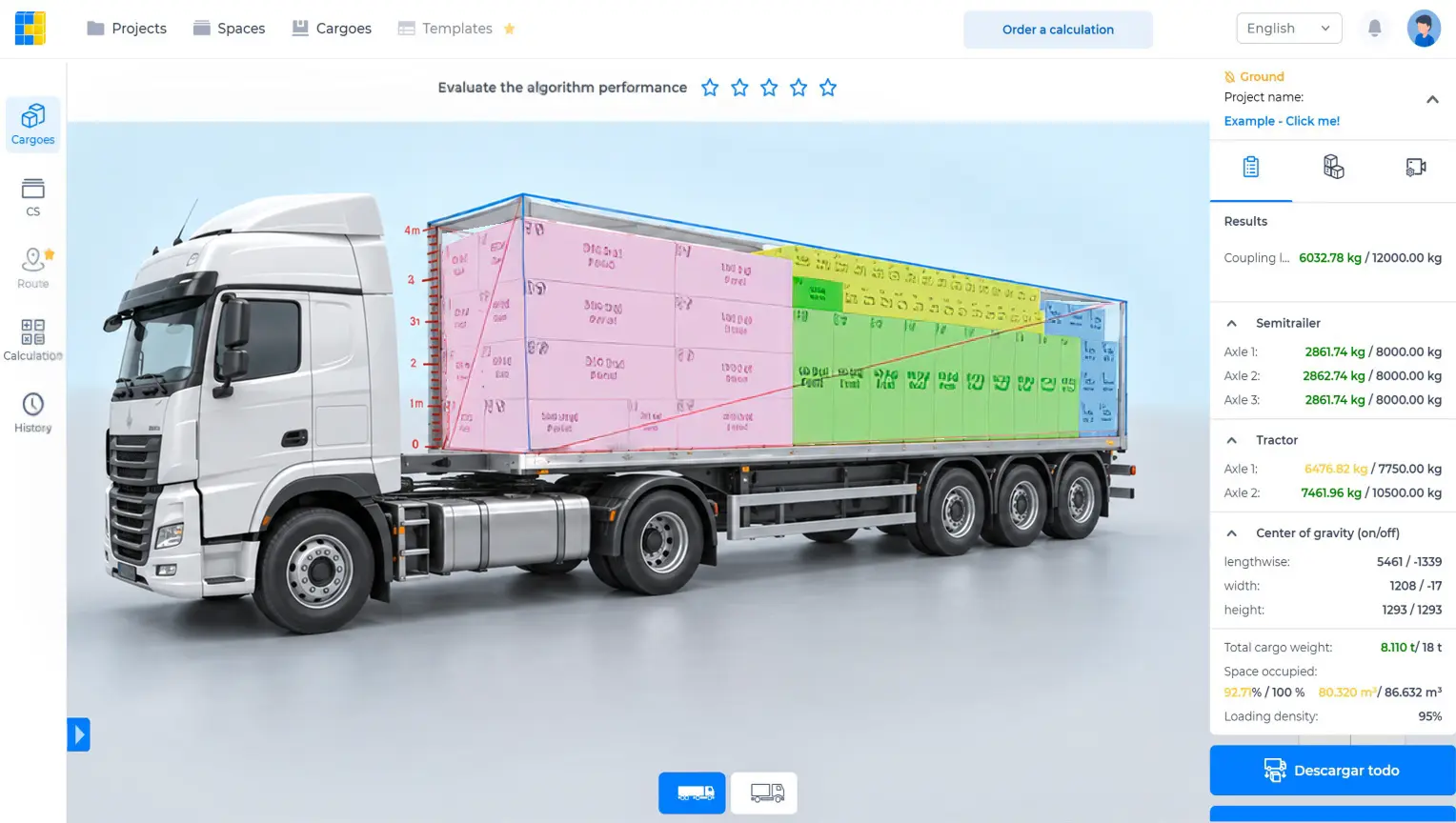
Example of the CargoTetris interface from the product website. This screen shows a different load from the 4.24 m³ example above.
Start with one real shipment. Compare the entered cargo with your packing list, inspect the arrangement and discuss it with the loading team. Packaging limits, cargo securing and vehicle weight checks remain part of the loading process.
Watch the CargoTetris workflow
See the English product walkthrough, from cargo data to loading instructions. Duration: 7:52.
Cargo volume questions
Can I calculate cargo volume from weight?
Not from weight alone. You also need dimensions or a valid density for the material and a clear definition of whether you are measuring the material or its packed shipping space. For boxed freight, measure the finished shipping unit.
Should I add a fixed percentage for empty space?
A fixed percentage is only an assumption. It cannot describe every mix of sizes, orientations and stacking restrictions. Keep measured CBM and any planning allowance separate, then check the actual layout.
Do I include the pallet in CBM?
If the shipping unit is a loaded pallet, measure the whole unit, including the pallet base and any overhang. Do not add the boxes again after you have counted that complete unit.
Turn your cargo list into a 3D load plan
Make the next plan with your own shipment. Create your account, add the checked cargo list and review placement in a truck, container or pallet. Give your team a visual plan to discuss before loading.
Compare cargo volume with the actual container interior. Then check the door and placement, because a lower CBM total does not guarantee a workable load.