Mixed pallet calculator: plan different box sizes


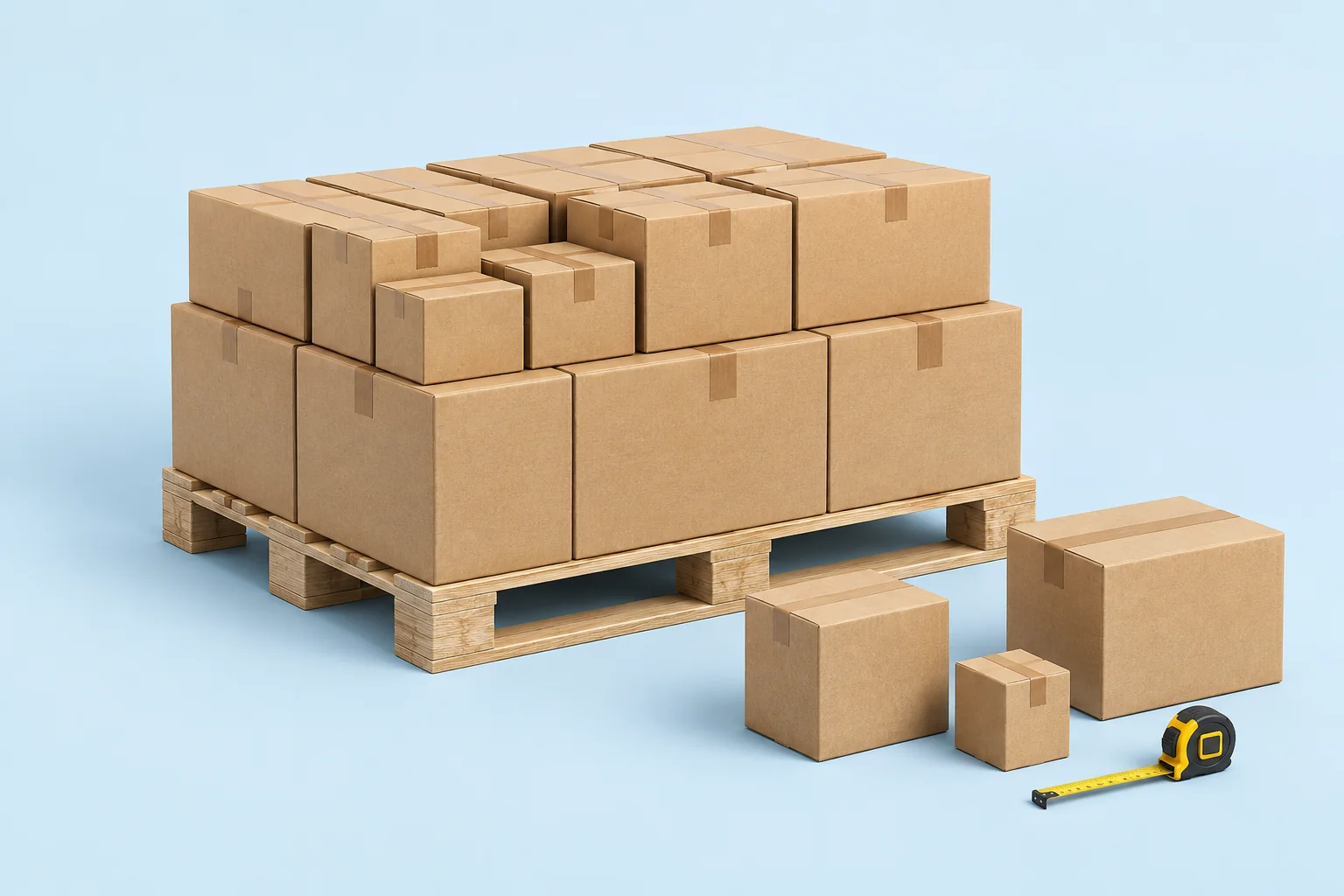
Mixed pallet planning combines different box sizes with height, weight and support limits. An average box volume cannot tell you how the layers should be arranged.
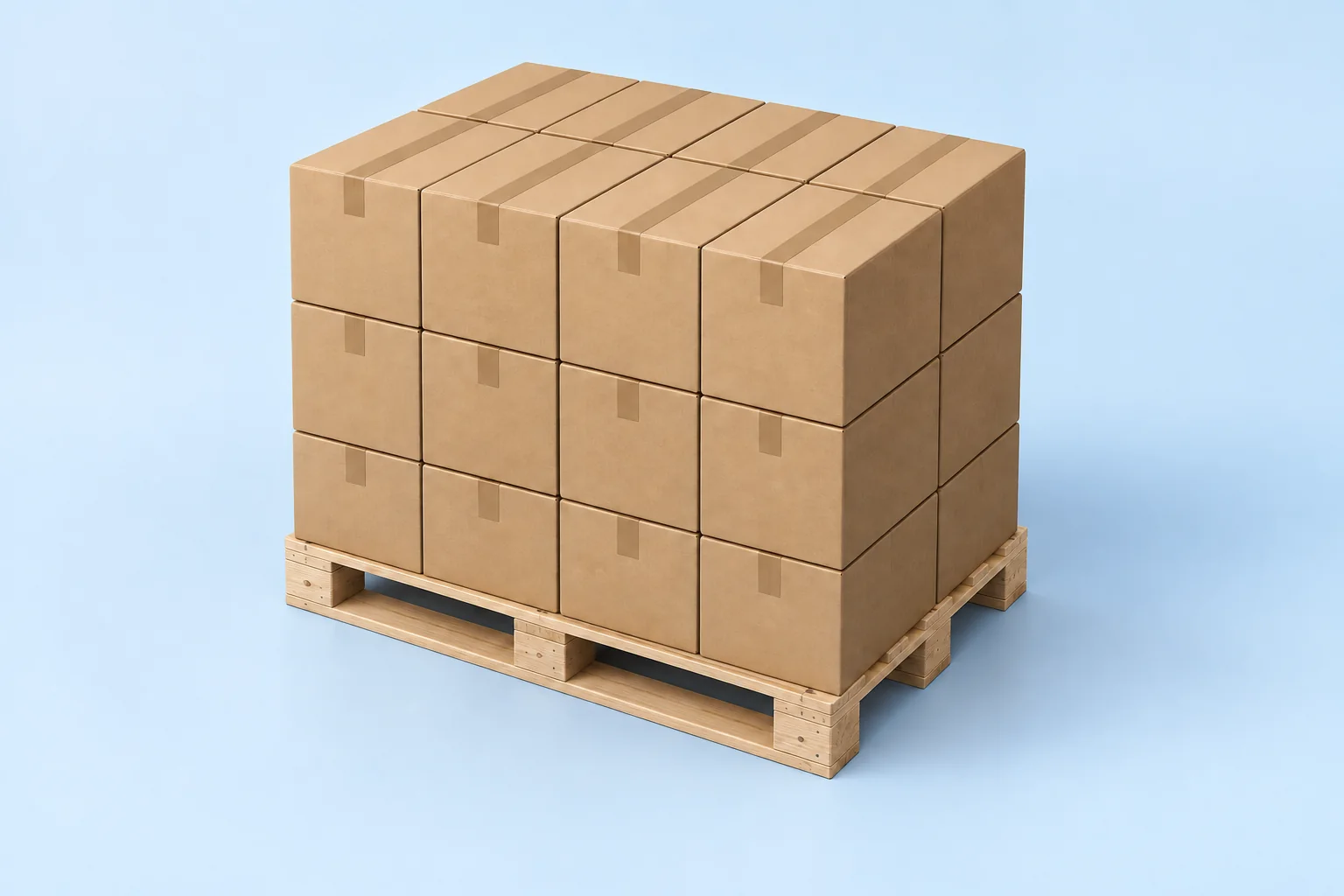
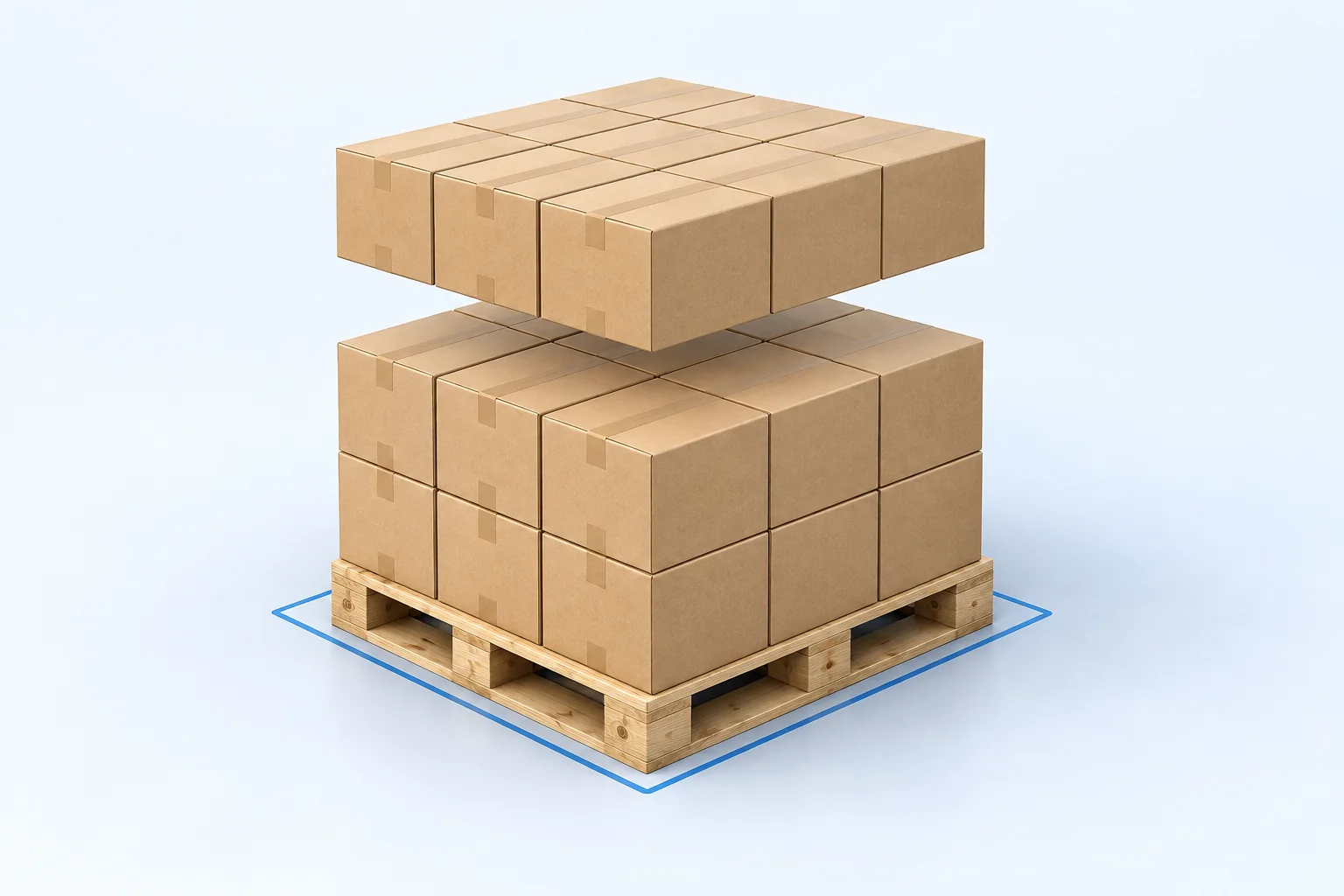
This illustrative two-layer plan holds 4 larger cartons and 8 smaller cartons on a 1200 × 800 mm pallet. With a 150 mm base, the loaded height is 650 mm. The gross weight is 92 kg under the stated example weights.
In this guide
Keep different cartons as separate cargo types
Record the outside length, width, height, quantity and gross unit weight of each carton type. Specify permitted orientations and whether other cargo may be placed on top. Use the pallet’s usable footprint and its actual handling constraints.
The example assumes a 1200 × 800 mm usable footprint, a 150 mm pallet base height and a 20 kg empty pallet. The base height and tare are synthetic inputs, not specifications for every pallet of this size.
| Type | Outside L × W × H, mm | Quantity | Unit weight | Carton volume total |
|---|---|---|---|---|
| A | 600 × 400 × 300 | 4 | 10 kg | 0.288 m³ |
| B | 400 × 300 × 200 | 8 | 4 kg | 0.192 m³ |
For identical cartons, the simpler boxes-per-pallet calculation can be a useful starting point. Mixed loads need a separate placement check for each size and layer.
Arrange a four-carton layer and an eight-carton layer
Lower layer: four type A cartons
Place two 600 mm sides along the 1200 mm pallet length and two 400 mm sides across its 800 mm width. The layer contains 2 × 2 = 4 cartons and is 300 mm high.
Upper layer: eight type B cartons
Rotate type B in the horizontal plane so its 300 mm side runs along the pallet and its 400 mm side runs across. The layer contains 4 × 2 = 8 cartons and is 200 mm high. The upright height remains 200 mm; this is not tipping a carton onto its side.
This gives 12 cartons across two layers. It demonstrates a geometric arrangement, not the maximum number possible or an approved packaging design. The upper cartons bridge some boundaries between lower cartons, so support and package strength must be assessed separately.
Calculate loaded height, gross weight and outside volume
| Measure | Calculation | Result |
|---|---|---|
| Loaded height | 150 + 300 + 200 mm | 650 mm |
| Cargo weight | 4 × 10 + 8 × 4 kg | 72 kg |
| Gross pallet weight | 72 + 20 kg | 92 kg |
| Sum of carton volumes | 0.288 + 0.192 m³ | 0.480 m³ |
| Outside loaded-pallet volume | 1.2 × 0.8 × 0.65 m | 0.624 m³ |
0.480 m³ and 0.624 m³ describe different things. The first sums the carton volumes. The second is the rectangular envelope of the loaded pallet, including its base. Do not add the two as separate cargo volumes.
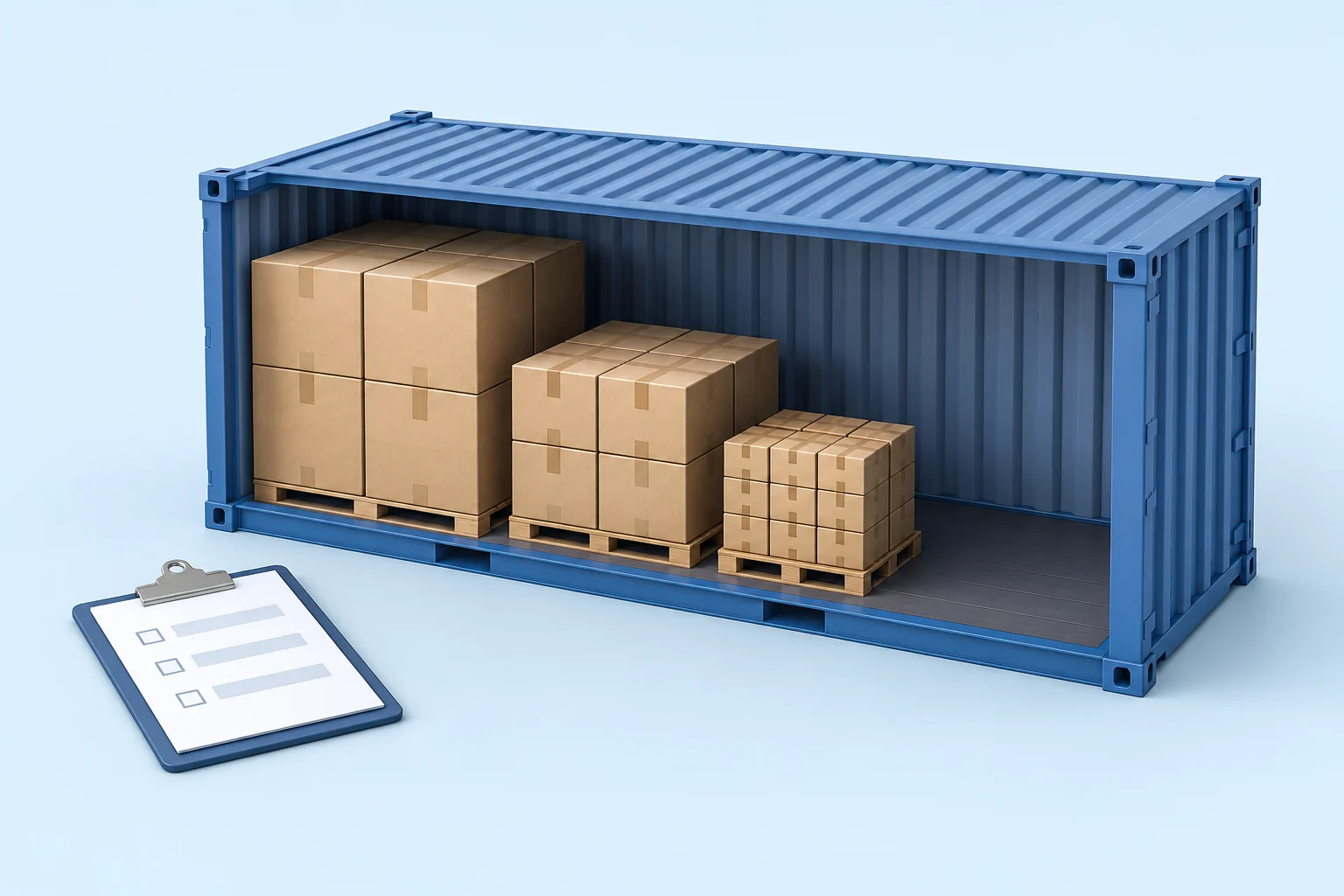
If a truck plan treats this loaded pallet as one shipping unit, use 1200 × 800 × 650 mm and 92 kg under these assumptions. Do not also add its 12 cartons as independent cargo. The loaded pallet volume guide explains this measurement boundary.
Reject a layer pattern if its support rules fail
Box strength and contact areas
The lower layer carries both its own contents and the upper cartons. A drawing with no geometric overlap does not establish acceptable compression or edge support. Confirm permitted loading with the packaging specification and responsible packing team.
No-stack restrictions
If type A cannot carry anything above it, the proposed two-layer arrangement is invalid. You may need a different pattern or additional pallets even though the total carton CBM has not changed. Record that restriction before comparing space utilisation.
Height, overhang and handling
Check the permitted finished height, loaded footprint, pallet capacity and equipment access. Include wrapping or protection that changes the outside dimensions. Avoid treating an exact edge-to-edge geometric fit as evidence that the finished unit will stay within the footprint.
Keep the weight data complete
Gross weight should include the pallet, goods and packaging once. If the supplied carton weights exclude packaging, complete them before using the result for a weight-dependent decision.
Plan mixed cargo in 3D with CargoTetris
Use separate cargo rows for types A and B, keeping the quantities and allowed orientations visible. In CargoTetris, add the cargo, choose the loading space and review the resulting placement in 3D.
Compare valid arrangements using the same shipment list. Check the placed quantity for every type, the resulting dimensions and any items left out. If an arrangement conflicts with a packaging constraint, reject it rather than comparing its utilisation with a valid plan.
Use the available report to discuss the chosen arrangement with the packing team. Confirm support, securing and handling outside the geometry check. The example in this guide is manually calculated and is not a screenshot of a product calculation.
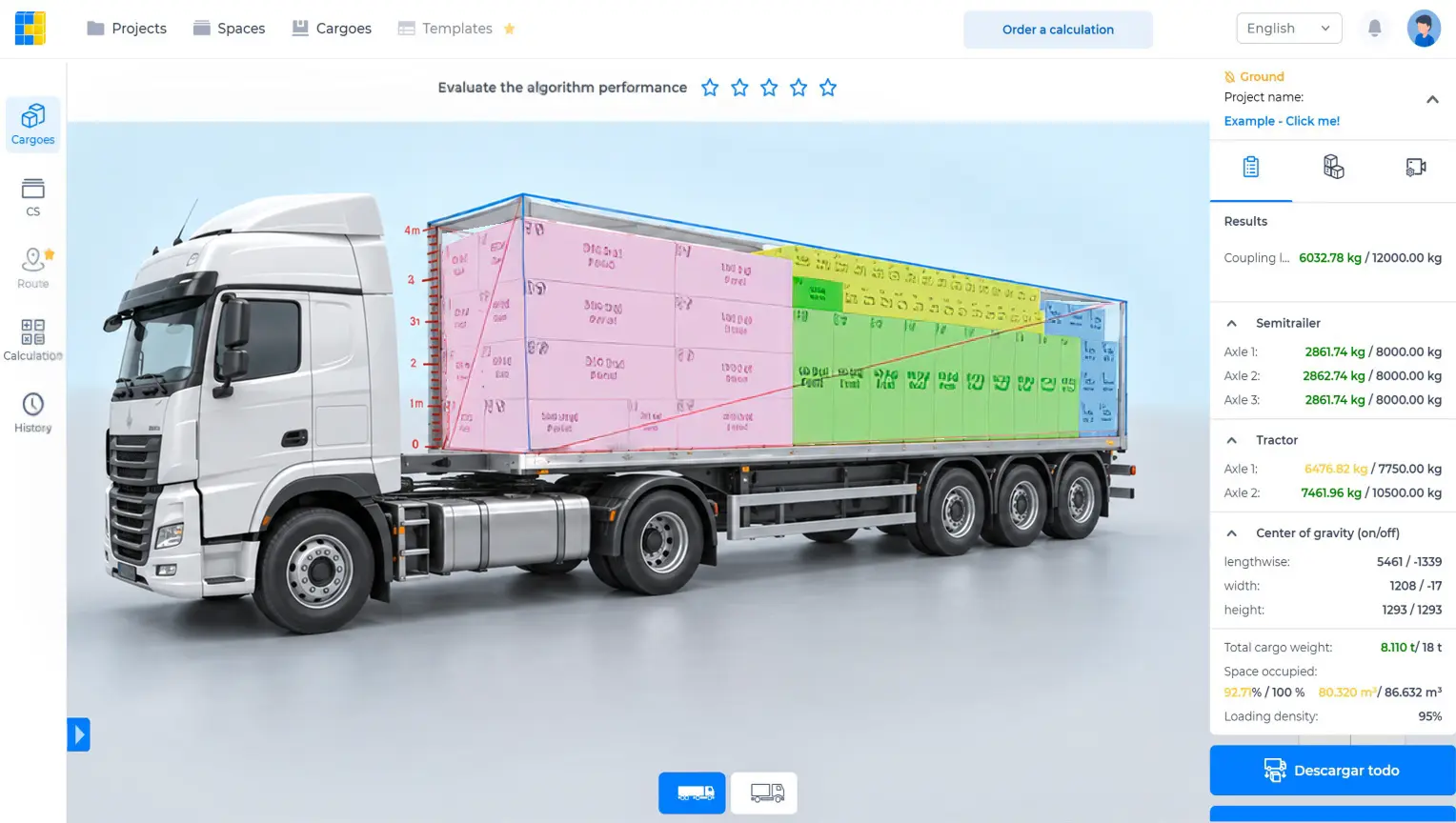
Watch the CargoTetris workflow
See the English product walkthrough, from cargo data to loading instructions. Duration: 7:52.

Mixed pallet questions
Can I divide pallet volume by average box volume?
That ignores the actual footprints, heights and support conditions. Keep each size distinct and calculate a layout that respects the relevant restrictions.
Should the heaviest boxes always be at the bottom?
Weight is one consideration, but packaging strength, stability, support and handling requirements also matter. Follow the confirmed packing rules for the goods; a weight-only rule is insufficient.
Can I freely rotate a carton to make it fit?
Only within its permitted orientations. Turning it horizontally and laying it on a different face can have different consequences. Record which rotations are allowed.
Build a mixed-cargo plan
Create your CargoTetris account and use your actual carton dimensions to review a 3D arrangement.
Continue to complete registration in the app.
Read also