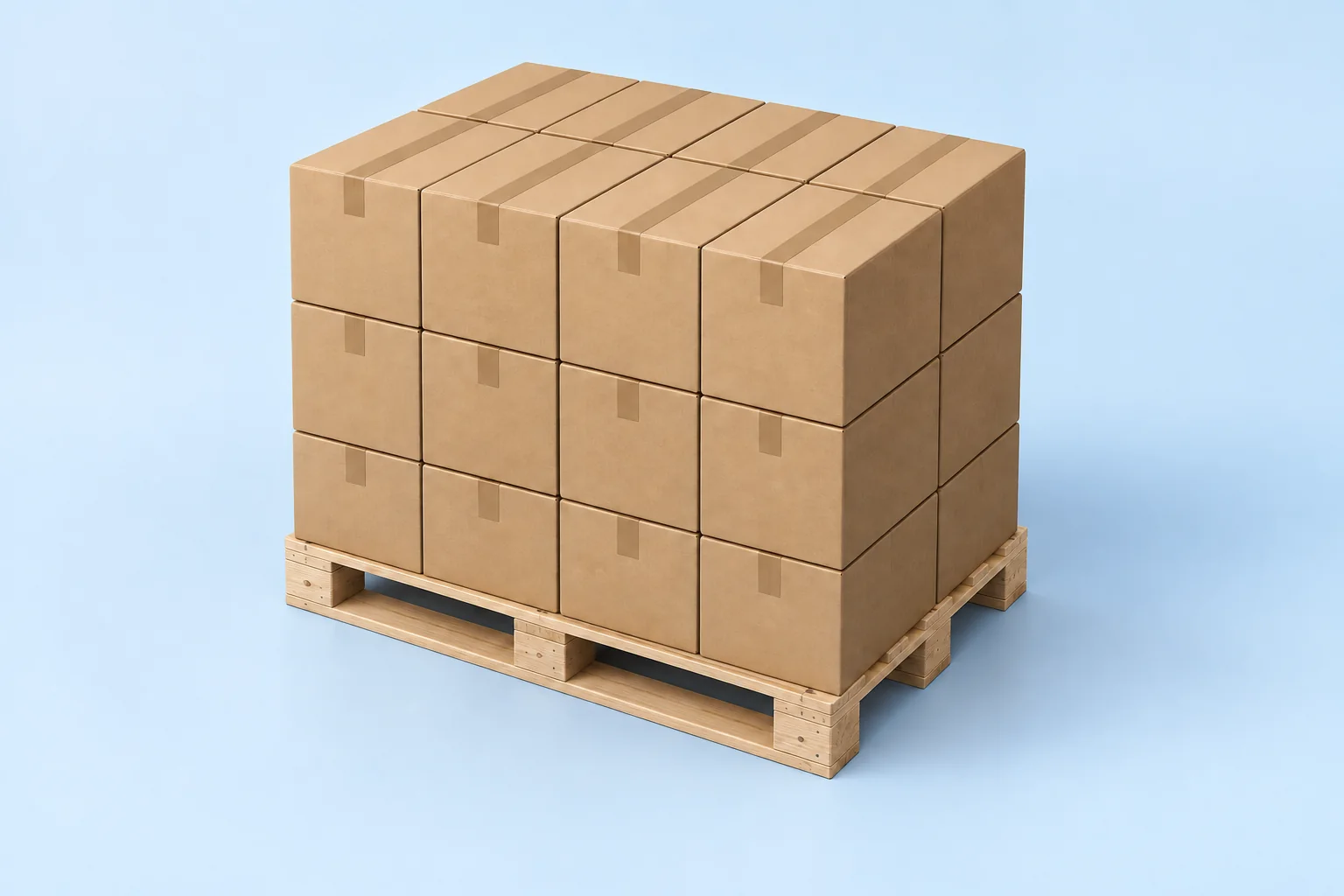
Palletization software: from products to pallets and trucks


Palletization is usually treated as one question: how many cartons fit on a pallet? In practice it is two questions, and they pull in opposite directions.
The first is how to build the pallet. The second is how those pallets fill the vehicle. A pallet pattern that maximises cartons per pallet can produce a pallet height that wastes a tier in the trailer, and a pallet built to a convenient height can leave cartons behind. Optimising either one alone produces a worse result than solving them together.

In this guide
The pallet you are building on
For an EPAL Euro pallet, the published footprint is 1200 × 800 mm and the nominal height is 144 mm. Its approximate own weight is 25 kg. Verify the condition and rated capacity of the actual pallet before use.
| Property | Reference value |
|---|---|
| Nominal dimensions | 1200 × 800 × 144 mm |
| Approximate own weight | 25 kg |
| Safe working load | 1500 kg; subject to condition and support requirements |
Pallet weight belongs in the shipment total. Using the approximate 25 kg figure, 33 pallets add 33 × 25 = 825 kg before a single carton is counted. Use measured gross weights where available. Our loaded-pallet volume guide explains how to include the base and finished load.
How many of them fit
For a simple geometric check, assume a clear trailer floor 13.6 m long and 2.45 m wide, no overhang, one layer of pallets and sufficient door clearance. Two possible rectangular arrangements are:
| Pallet footprint | Arrangement | Pallet count | Occupied floor length |
|---|---|---|---|
| 1200 × 800 mm | 3 across × 11 rows | 33 | 13.2 m |
| 1200 × 1000 mm | 2 across × 13 rows | 26 | 13.0 m |
These are illustrative floor arrangements, not universal vehicle capacities. Check usable space, obstructions, gross load, securing clearance and access. Double stacking is a separate decision that depends on the loaded pallet height and the support capacity of the lower unit.
Check the pallet and the vehicle together
First plan the carton arrangement on the pallet. Then use each complete loaded pallet as the shipping unit when checking the vehicle. CargoTetris provides pallet and vehicle loading spaces. Confirm whether your workspace supports the multi-level workflow and settings required for your packaging process before relying on a single combined calculation.
The practical consequence is that you can compare a proposed pallet build with the vehicle it must enter. A small height change can affect whether a second approved layer fits. Do not assume that the best carton count per pallet also gives the best complete shipment.
The rules that shape the pattern
Cartons are not free to be turned however the calculation proposes, and pallets are not free to be stacked as high as the trailer allows. Both decisions depend on the supplier's handling instructions and the available cargo settings.
Permitted orientations determine whether a carton may be laid on its side. The permitted load on top helps assess whether another unit may be placed above it. Double stacking also requires appropriate packaging, pallet support and load stability checks.
Mixed pallets
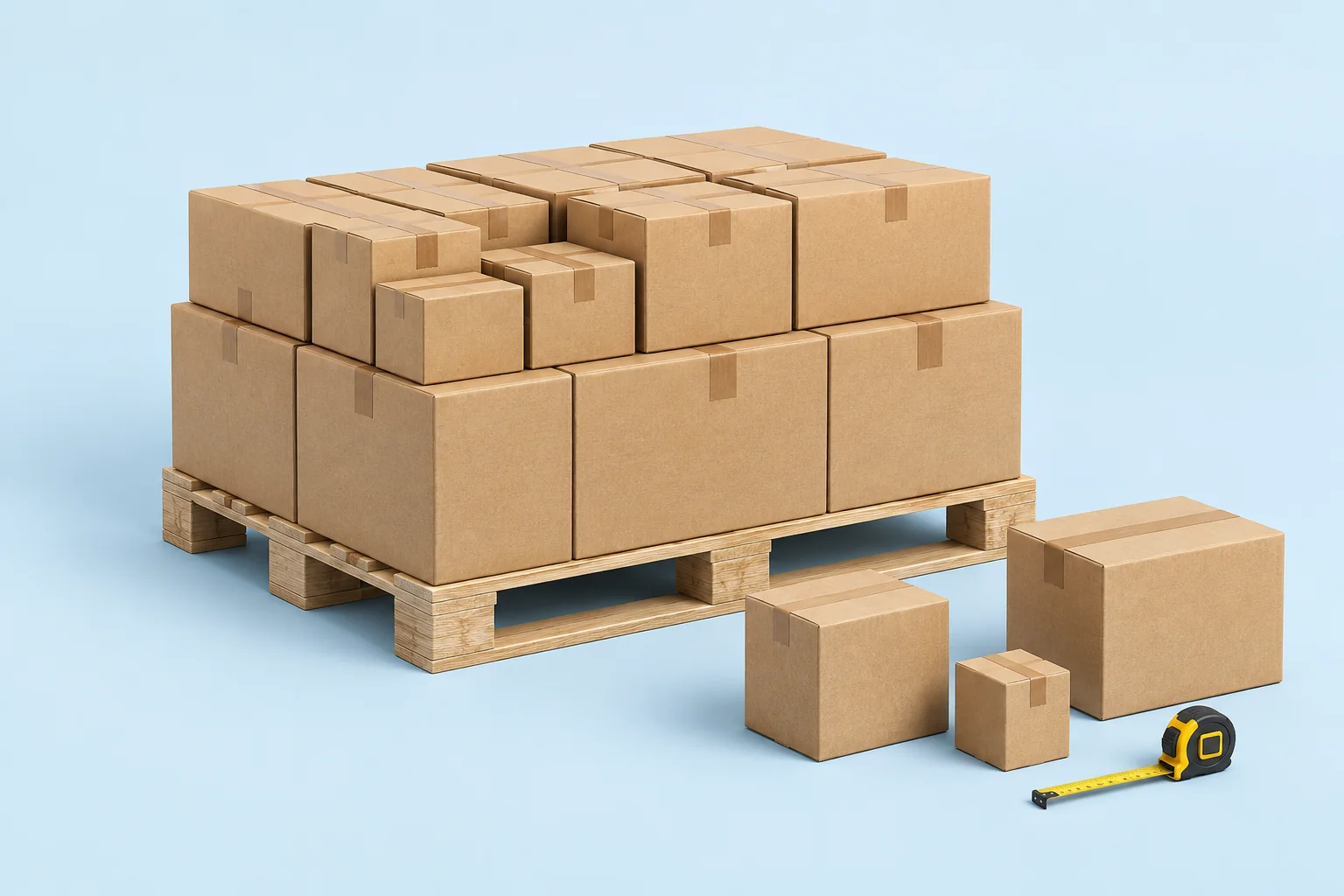
Single-SKU pallets are straightforward. Mixed pallets, built for a specific customer order, are where most of the manual work sits.
The same rules apply, but the combination matters: the pallet has to be stable, heavier items belong lower, and the rules of each item constrain what may sit above it. Grouping cargo lets you build a pallet per order or per destination rather than one anonymous pallet of assorted goods.
Then the vehicle
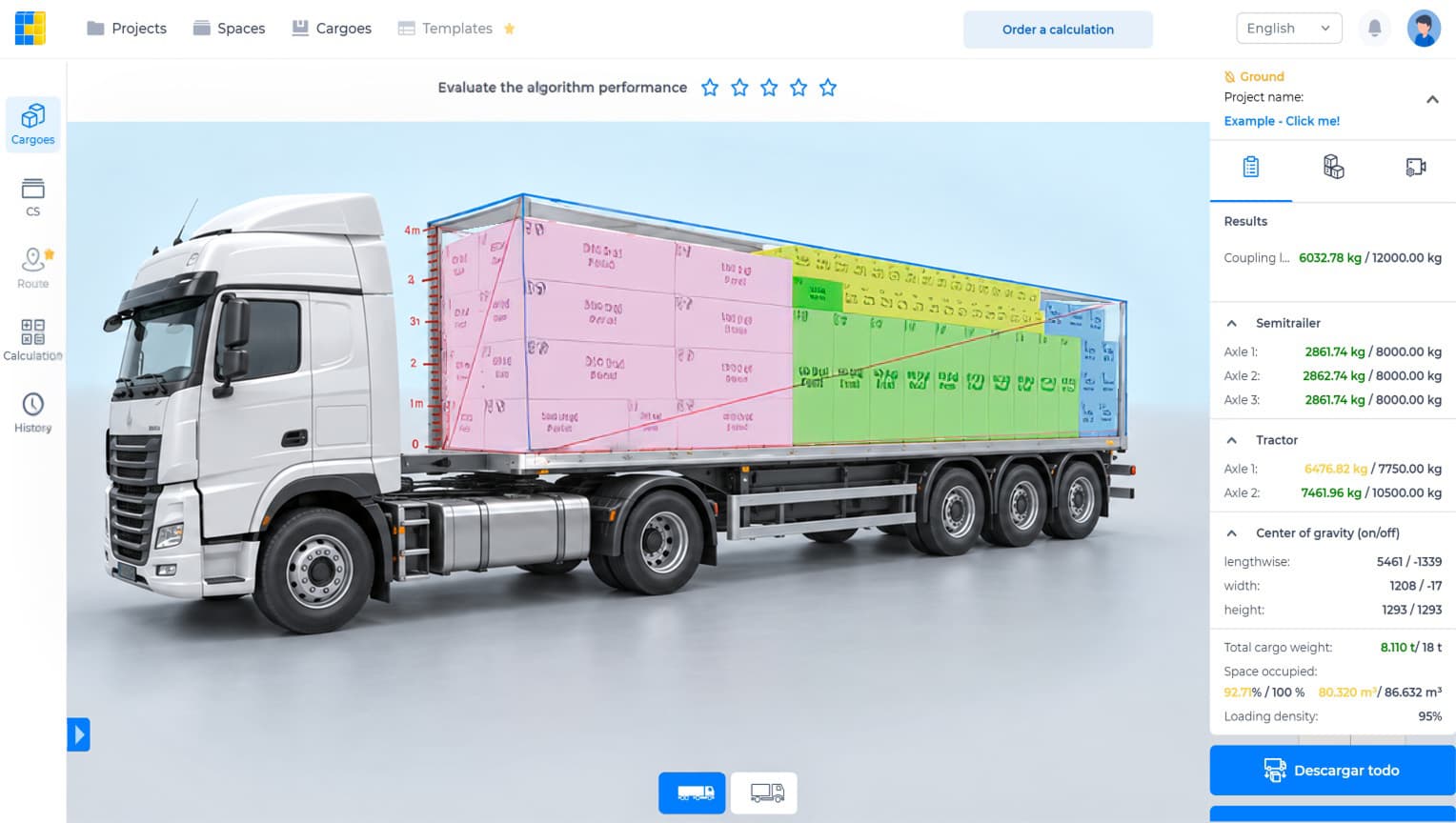
Once the pallets are built, they become the cargo for the vehicle plan. Use their finished dimensions and gross weights, including the base. For road transport, review the axle and coupling readings as well as space occupied and total weight; the truck loading guide shows a worked product demonstration.
Start with a pallet you already build
Take one of your standard pallets, enter the carton and the pallet, and compare the proposed arrangement with the one your line uses today. Then check those finished pallets in the actual vehicle you normally book.
Watch the CargoTetris workflow
See the English product walkthrough, from cargo data to loading instructions. Duration: 7:52.

Start with your own cargo list
Create an account, enter a representative shipment and review the available planning workflow with your team.
Continue to complete registration in the app.
Read also